Everything about Bossiney Court lends itself to fortuitous discoveries, and I’m starting to realise that this is one of the main advantages to taking on a restoration project: patterns, places, pieces of history are concealed like gems in rock, waiting for a curious explorer to bring them to light.
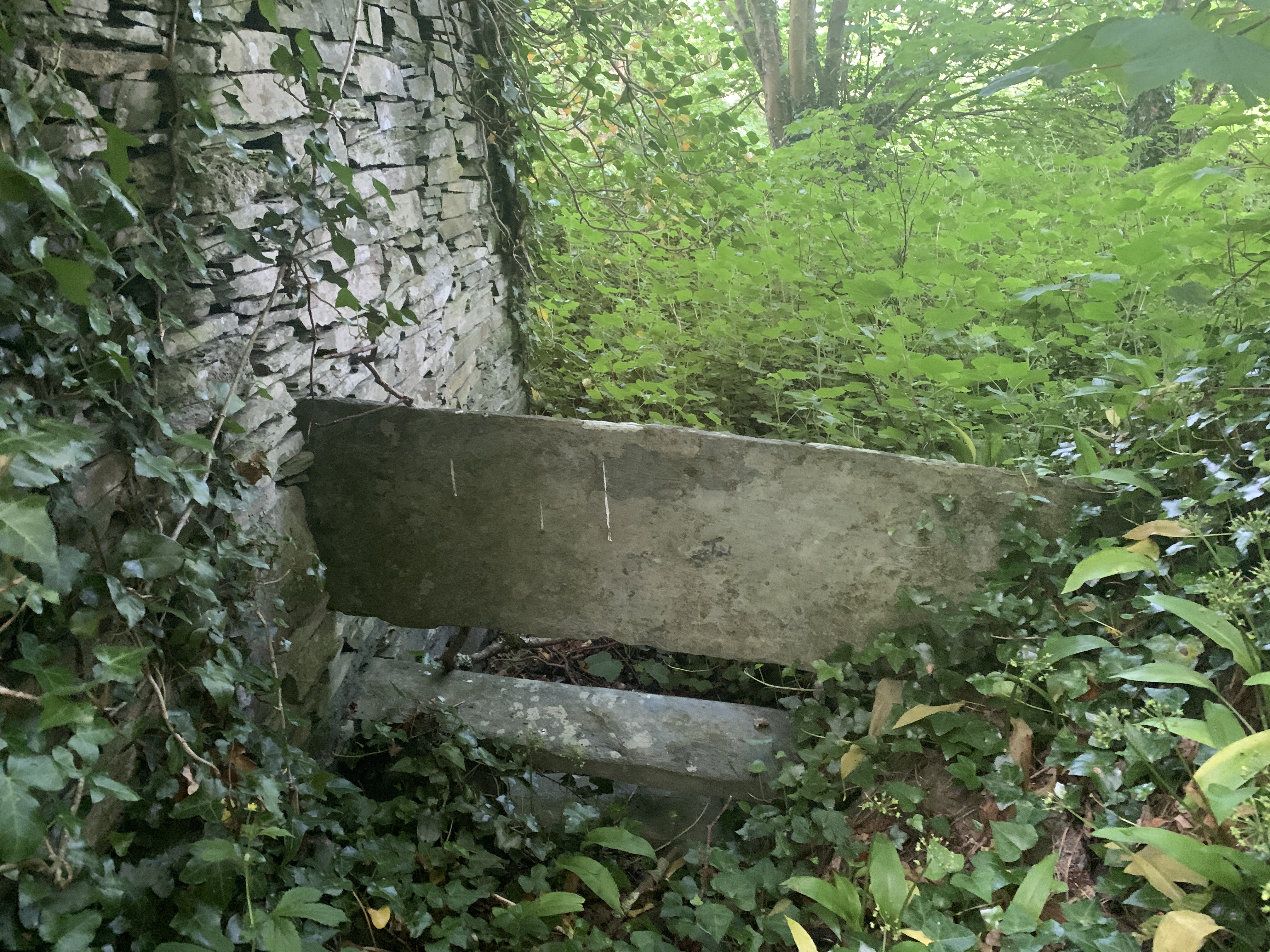
The very first time we saw the place, back in February 2022, we walked around mouths agape, unable to believe quite how magical the place was (and how lucky we were that it hadn’t yet sold). Most probably, prospective buyers had been put off by the sheer amount of work that was clearly needed to make the place accessible, never mind habitable. Possibly also they were unable to see the potential of the place, swathed as it was (and still is) in ivy, bracken, brambles and sycamore saplings. We walked around, peeling back carpets of greenery, and were struck by the mysterious, rough atmosphere of the place. Beneath the green lay all kinds of stone structures: the purpose of which remain obscure to us still, and which we are trying to uncover. Even as recently as a few days ago I am discovering new walls and shelters crafted in the traditional herringbone build characteristic of this part of Cornwall. Even the local stonemason is perplexed as to what the purpose of all of it originally was.


Beyond the stones, we are finding all sorts of lovely plant life, from a huge fig tree which was completely concealed by a rampant bush of loniceria and brambles, to a beautiful bank of orange crocosmia and a neglected – but still prolific – pear tree.


Then there’s the stuff we find about the place: a rusted but still functional wheelbarrow, a mysterious painting of a man smoking a long pipe with a tremendously evil cat seated on his knee, some examples of the pottery produced here when it was the commercial Tintagel pottery, and a mess of worm eaten furniture and chipped slates which fill many of the abandoned outbuildings and shelters. I suspect we haven’t even begun to uncover the gems (and horrors) hidden in all these spaces.


One of the most fortuitous discoveries is the crest lurking under ivy on the front of the house. Bossiney Court is supposed to date from 1650 or thereabouts, although our digging in the records office at Redruth brought to light some literature that suggested there had been a building on this site mentioned in the Domesday book (which we have been unable to find). Given the incredibly sheltered position the house and grounds sit in, it’s highly likely that people have been living here and growing fruit and vegetables for many centuries. The crest, which contains scallop shells, wheatsheafs and seedpods, seems to allude to the fecundity of the place. My diligent father, who has been trawling through the records of family crests in the south west of England suggests the crest relates to the joining of two local families: the Opies and the Stanburys. Perhaps as we keep speaking to people and uncovering the history of the place, we will find out more.


As to the more recent history of the place, we are lucky to have many friendly locals who remember who lived here, and some local literature to give us more information. The last owner before us was a wonderful-sounding lady called Enid Mutton, who worked in the Tintagel Pottery which forms part of the grounds. She painted the pottery in its distinctive style, grew vegetables and flowers until the garden got a bit much for her, and seems to have been a powerful local character who drew both admiration and fear due to her strong character. As I go about the house I often think about her and sometimes talk to her. I hope she approves of what we are doing!
Just today I had another fortuitous discovery: on Twitter, a painting of Bossiney Court from 1921, showing a group of artists who rented the building when it was clearly in much better condition. We are delighted to note a long history of artists, potters and creative folk who have made this place their home. We will try to do justice to their memories (and ghosts)!

 bookbusbird