One of the things we always planned to do when we found our forever home was to become somewhat self-sufficient with veg and fruit. I say “somewhat” because I’ve had an allotment before and discovered how challenging self-sufficiency really is. The allotmenteers next to me were pretty much self-sufficient, but they were also ruthlessly efficient, spent all their holidays at the allotment and there were two of them working on their plot every week. F’s full time job is the house, and so our veg garden will be mostly my job once it gets established, which I will need to fit in around my salaried job. If you want to read about real self-sufficiency, I highly recommend that you visit the Pirate Ben’s blog and sign up for his newsletter. Ben’s goal for his first year of self-sufficiency was “do not die” (spoiler alert: he’s currently on Year 3). My more modest goal for the rest of this year is “get started” with sub-goals as follows:
- Clear the plot. DONE.
- Plan where the greenhouse and beds will go. DONE
- Landscape the plot so that paths and beds are accessible and there is a level area for the greenhouse. SOON!
- Install the greenhouse. AMBITIOUS!
- Install 4 initial beds and get planting. SOON!
Clearing the plot was easy because I paid Carl and Roxy, my neighbourhood garden care folk, to do it. They did what would have taken me weeks in about a day and so it was money well spent. I’m trying to make some careful cost-benefit analyses about gardening this place. I’d love to do it all myself, but I don’t have the time, energy or tools, especially when it comes to the heavy stuff. Carl and Roxy have been amazing so far, and anything they haven’t been able to do themselves, they always know someone who can help. So far they have connected us with a stone-mason, electrician and a man with a mini-digger, who is going to help us with our third goal, to landscape the plot.
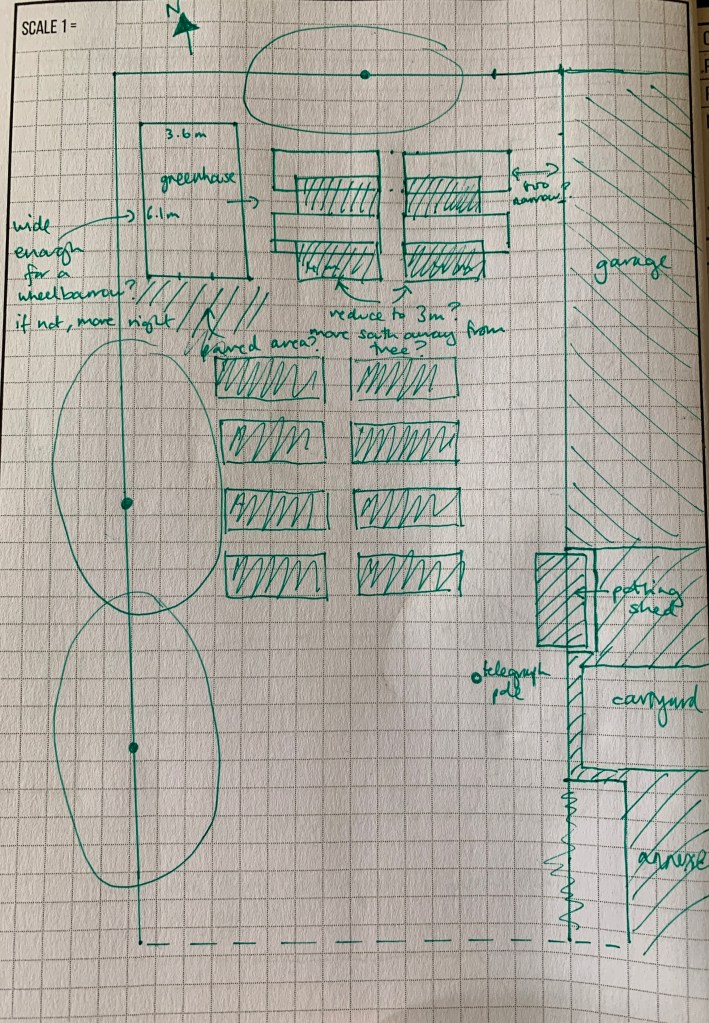
In the meantime, we’ve been doing a lot of smaller bits of landscaping and a lot of thinking, investigating and planning. One of the most important things we did was to properly measure the plot, which required us to buy a 50ft measuring tape and spend half an hour measuring distances from the garage wall and from tree to tree. This enabled me to draw out a proper scale plan of the site. In particular I needed to understand where the productive area was. There are three large sycamores bordering the site, and their crowns shade a lot of the productive area for part of the day. Having a scale plan also enabled me to plan different configurations of beds. I know from a lot of reading about other people’s plots that ultimately I will want somewhere between 8 and 12 beds, plus a large greenhouse. In the first year I’ll probably just focus on the greenhouse and 4 beds plus some fruit trees, with the aim to expand the number of beds in year 2. However I need to make sure I have enough space for all the beds from the outset, and with the tree shading limiting the productive area of the plot, a lot of planning was needed. Below is one possible configuration that we planned. The area of empty space at the bottom is too shaded for growing veg.
One very odd thing about the plot when we took it over was the position of a large privet hedge. It had been planted parallel to a boundary wall, about five metres into the plot. This actually reduced the productive area (the area which receives sufficient sunlight) considerably and although I assume it was originally planted for a good reason, in the end it annoyed me so much that I asked F to cut it down. Now we have a row of privet trunks taking up valuable bed space, but hopefully the mini digger should be able to grub those out fairly easily.
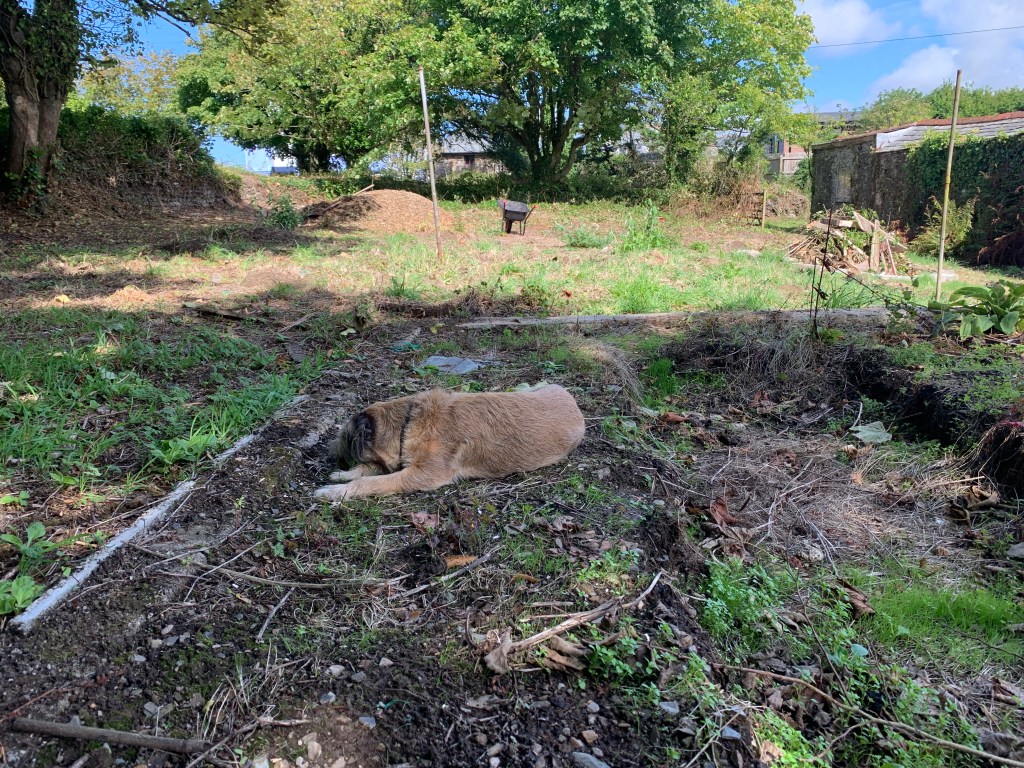
Siting the greenhouse has been another challenge. I knew that I wanted a Rhino greenhouse (I’ve always loved their simple aluminium frames and if we install it properly it should last decades) and we were advised by numerous people to get the biggest one possible, which turns out to be 12 feet by 20 feet. Although there’s more than enough space for that on the plot, there are only a few level, sunny areas where it could go. We thought we had chosen the right one, but F sensibly suggested we talk to our neighbours over the wall about it in case they objected. Standing in their kitchen, it became obvious that our massive greenhouse was going to obscure their lovely view of the hill in the distance, so we’ve decided to move it further into the plot. The site we’ve chosen isn’t level enough, so the mini digger will need to be used to do a bit of terracing. All of this has made me doubly aware how important it is to make friends with your neighbours when you live in a village like ours. Since we’ve made friends, our neighbours have been sharing their huge tomato crop with us and are excited to discuss our garden plans with us. Pretty important as we will be seeing each other all the time over the garden wall!
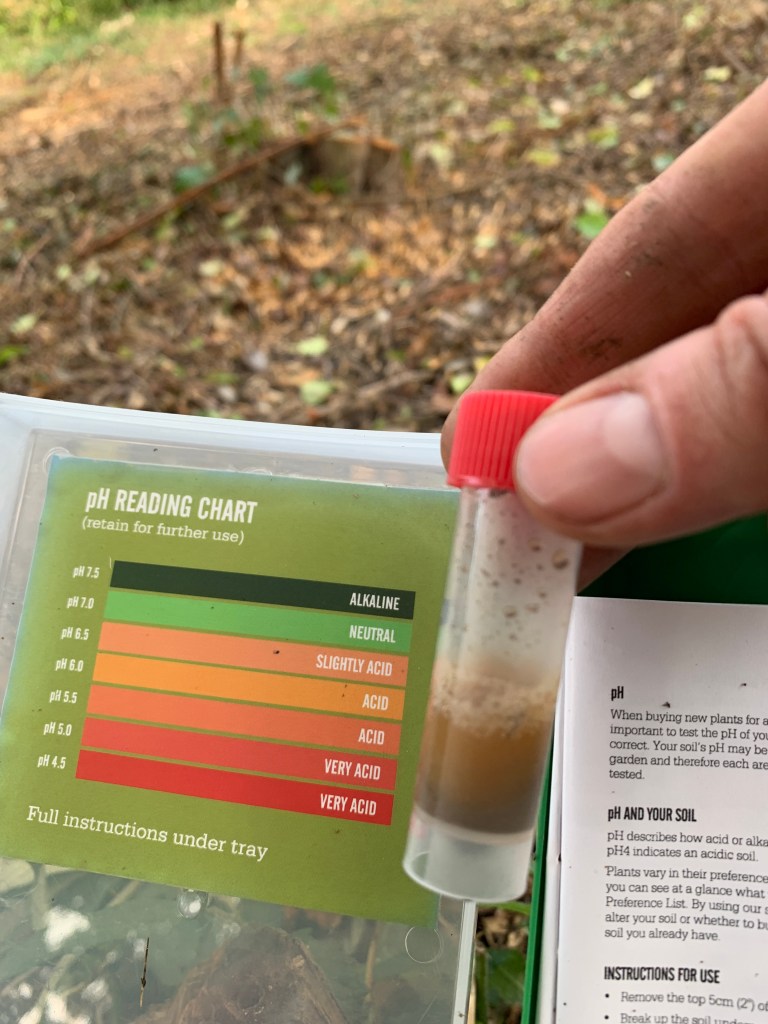
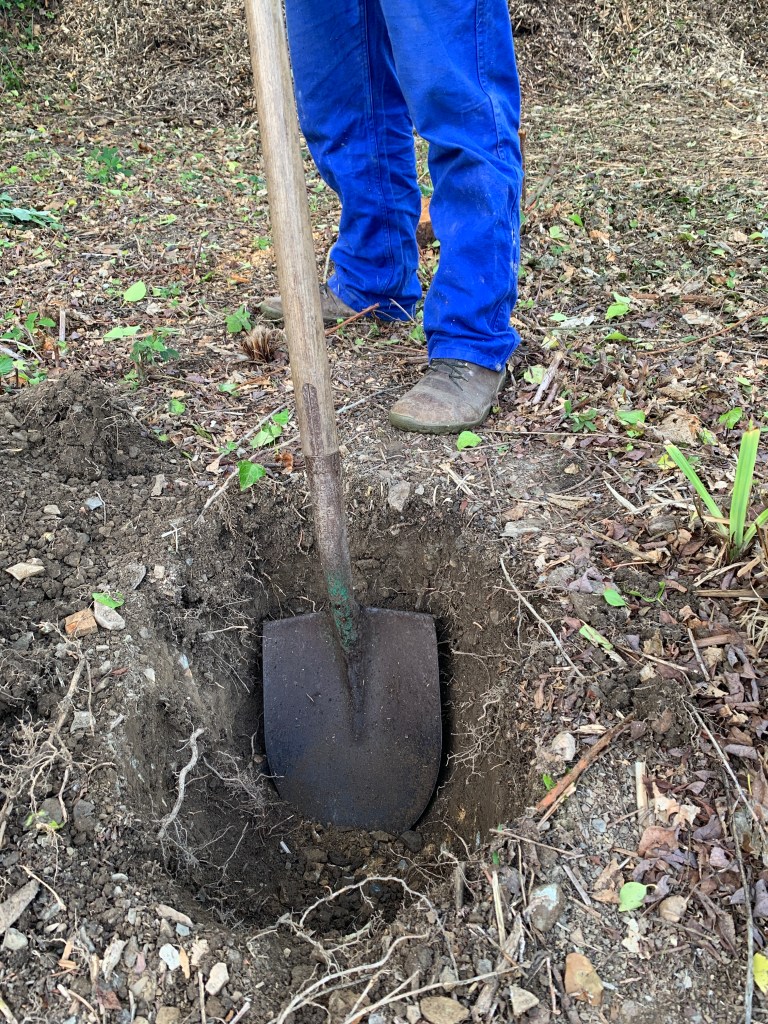
Yesterday we spent the day in the veg garden plot, clearing junk out of the soil and preparing the plot for the mini-digger. F dug a hole so we could see what we would be growing our plants in. The soil isn’t as wonderful as it is in the walled garden, where decades of leaf mould have created a lovely fine tilth. However, beneath the weed-infested, lumpy surface, there is some good soil, and a fair depth of it before we hit hard slate. I tested the soil and found it acid, with a pH of 6.0. To be honest I’m not absolutely sure of the point of soil testing. You have what you have, and although we will be importing lots of compost to start off our beds, the veg will have to make do with what it finds beneath. People have grown plants for eating in this spot for – I assume – centuries, so I think we will be fine. Next challenge – installing the greenhouse before the winter weather gets too horrendous.
There’s a lot more I could write about how we’ve planned to position the greenhouse (north to south) and the beds (east to west), but I need to get out in the garden while the weather holds. Here’s a list of resources I’ve found useful (but there’s also a lot of great information available online for the price of a few hours’ searching).
Dan Pearson’s garden design course on Create Academy (pricey, but goes into huge detail about Dan’s approach to design with several lessons focused on his veg garden. His blog is free.)
Grow your own vegetables, by Joy Larkcom.
Growing food, by Anna Pavord.
 bookbusbird
One thought on “Planning the veg garden”