Good grief it’s been over a month since my last post – not for lack of things to write about, that is for sure. We’ve been incredibly busy at Bossiney Court, with a huge amount of building work taking place (and the resulting large sums of money finally flowing out of the bank account!)
While I try hard not to think too much about that latter point, I’ll focus on what we’ve been doing with the roof. In many ways, the roof is one of the biggest and most complex parts of this renovation. It is a total beast of a thing to take apart and rebuild, partly because of its large surface area, partly because of the need for “bat mitigation” (of which more later) and partly because the terms of our planning permission require us to replace the roof slate with like-for-like rag slate, which is hard to find and very expensive.
To add to the complication, we had to replace our roofing team a few weeks ago. The initial team did a good job, and in fact have already completed the less complex front-facing side of the roof. However, they were extremely slow (starting six months later than estimated) and we found that the costs they had originally estimated were quickly spiralling way beyond what we had agreed. When they finally presented us with a revised quote for the total work, it had almost doubled from their initial quote (which, for reference, was almost £50,000!) We had expected some increases on the initial quote, but not double the amount!
Unfortunately this type of scenario seems extremely common for all types of building work – it is apparently quite usual practice to lure clients in with low initial quotes, and then just shrug shoulders when the costs spiral up. If you are managing your own renovation, it helps massively to talk with a variety of local builders, and (if possible) to work with someone on the basis of time and materials.
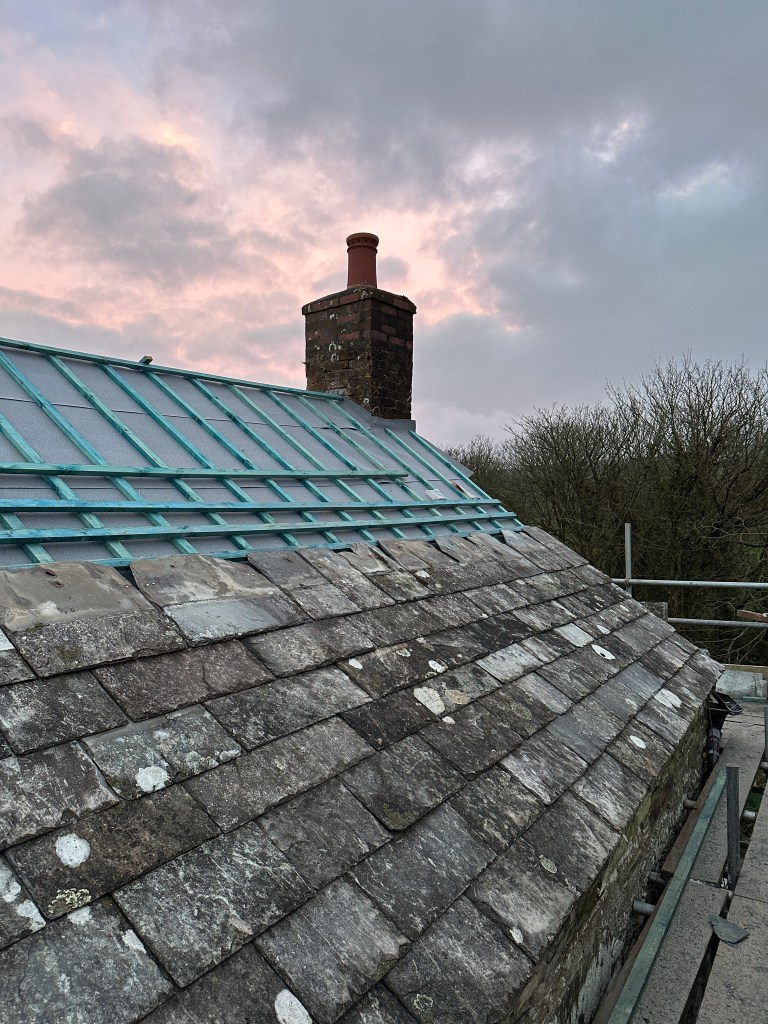


Fortunately for us, in the time while we were waiting for roof work to start we had starting working on other parts of the renovation with a fantastic local builder, and when we were arguing with the first set of roofers he agreed to step in and take over the roof work, pausing the other work he was doing.
In the end, we finished with the first team on a Friday, and the new team started on the Monday. We are now pretty confident that roof works won’t exceed the original estimate, and that they will finish before the end of June, enabling us to move on to the main part of the house.
Meanwhile, the new roofing team have been working on the complicated back portion of the roof. As you can see from the gallery of photos below, the surface area of this side is enormous. Most of it was covered in a layer of bitumen, which had coated the existing tiles. A big part of the work has involved stripping off all the old tiles, discarding the ones which can’t be re-used, sorting them into sizes, scraping off the tar and (eventually), using them to re-slate the roof. Because so many of the old tiles are damaged beyond repair, we are having to source new rag slate. Here our builder has been incredibly helpful: trawling Facebook marketplace for people selling off batches of old slate, and then going to investigate and negotiate a good price for us. We’ve bought hundreds of “new” old tiles in this way, and hopefully will soon have enough without needing to buy from a more expensive wholesaler.
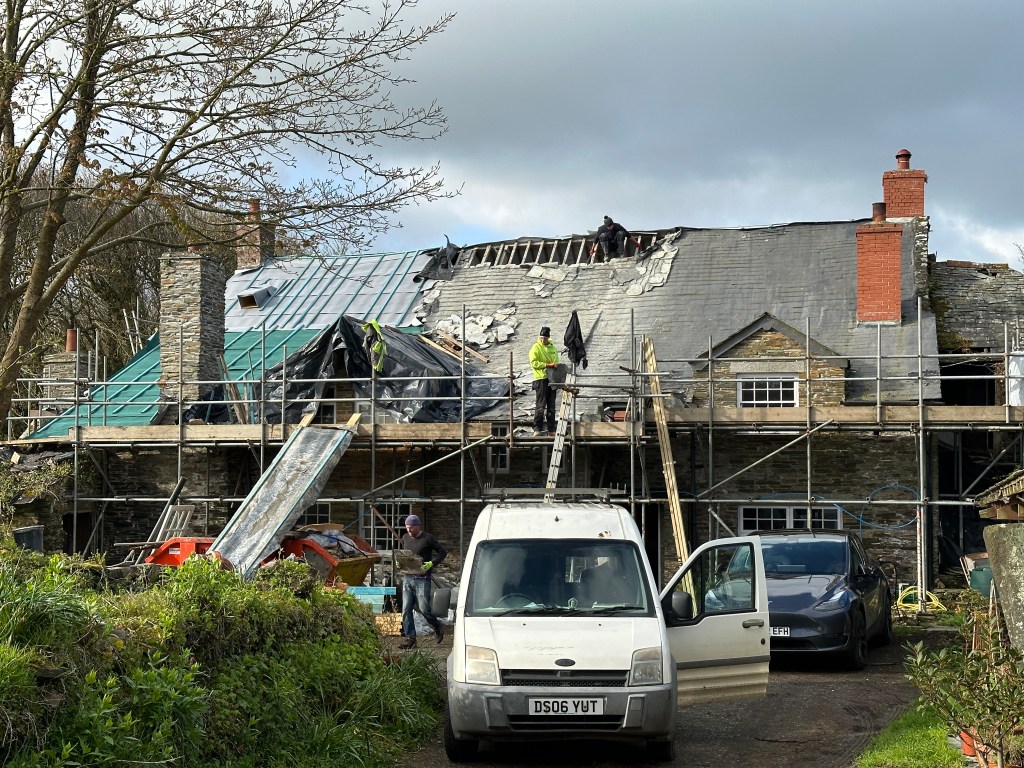
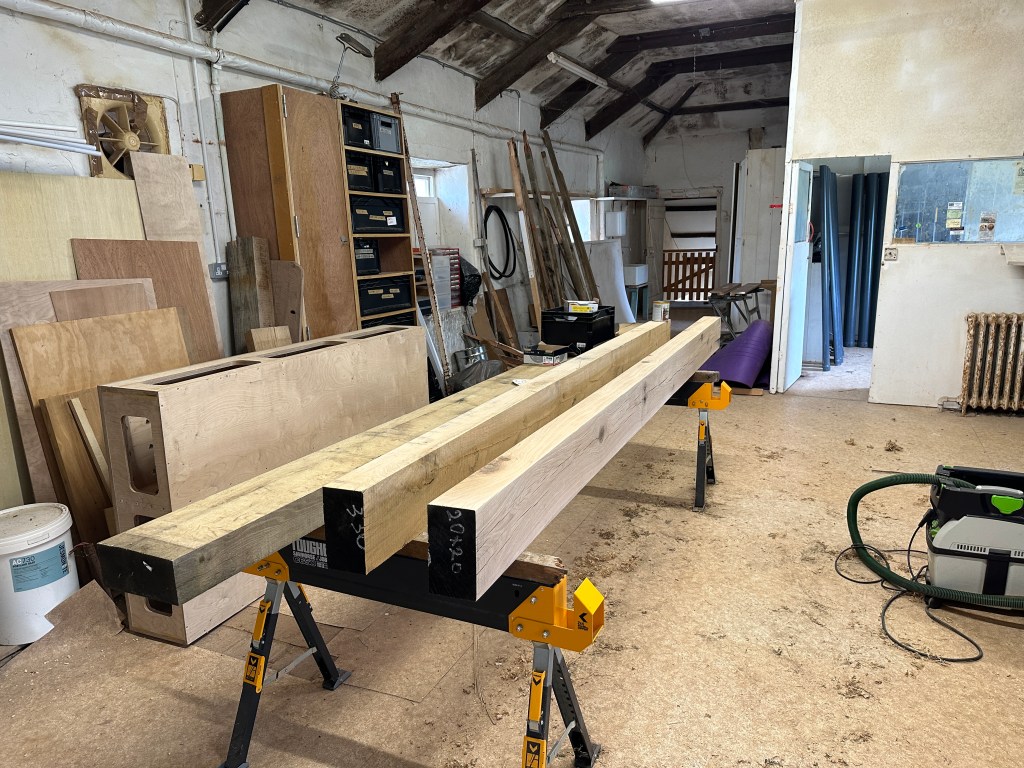
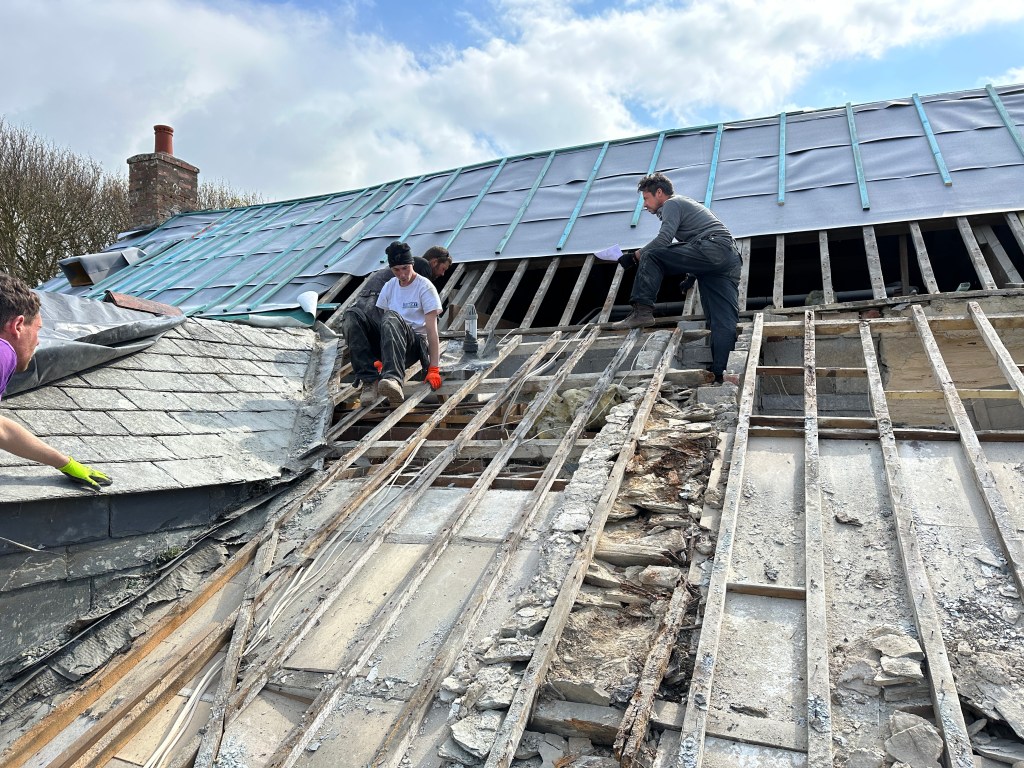
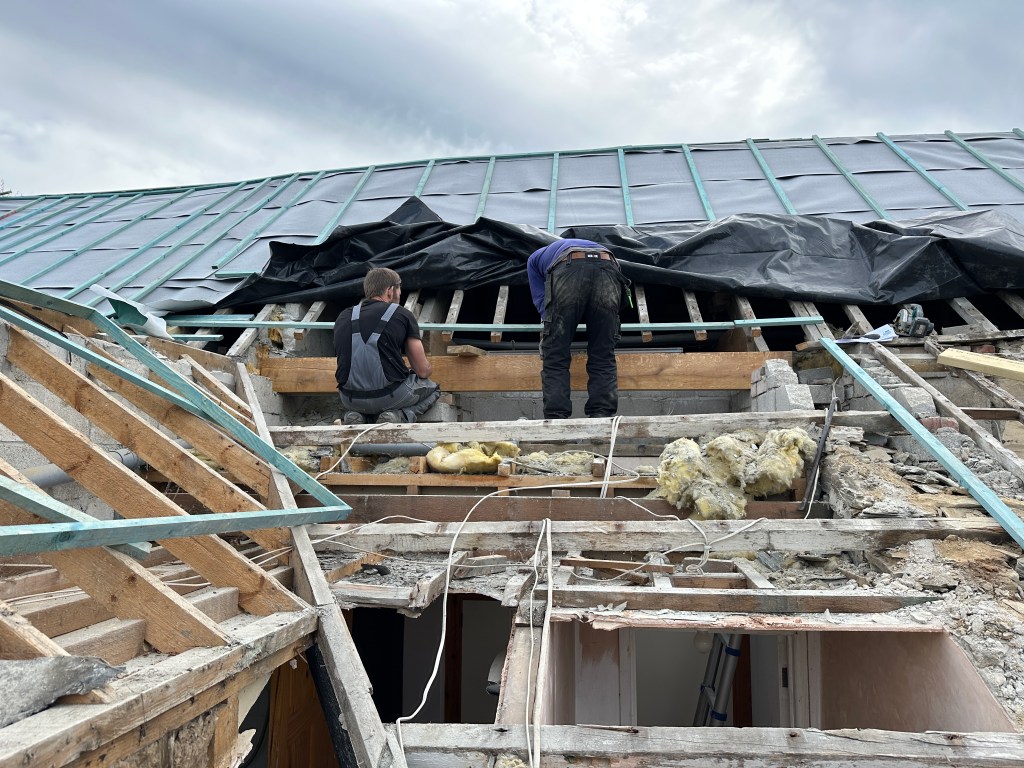
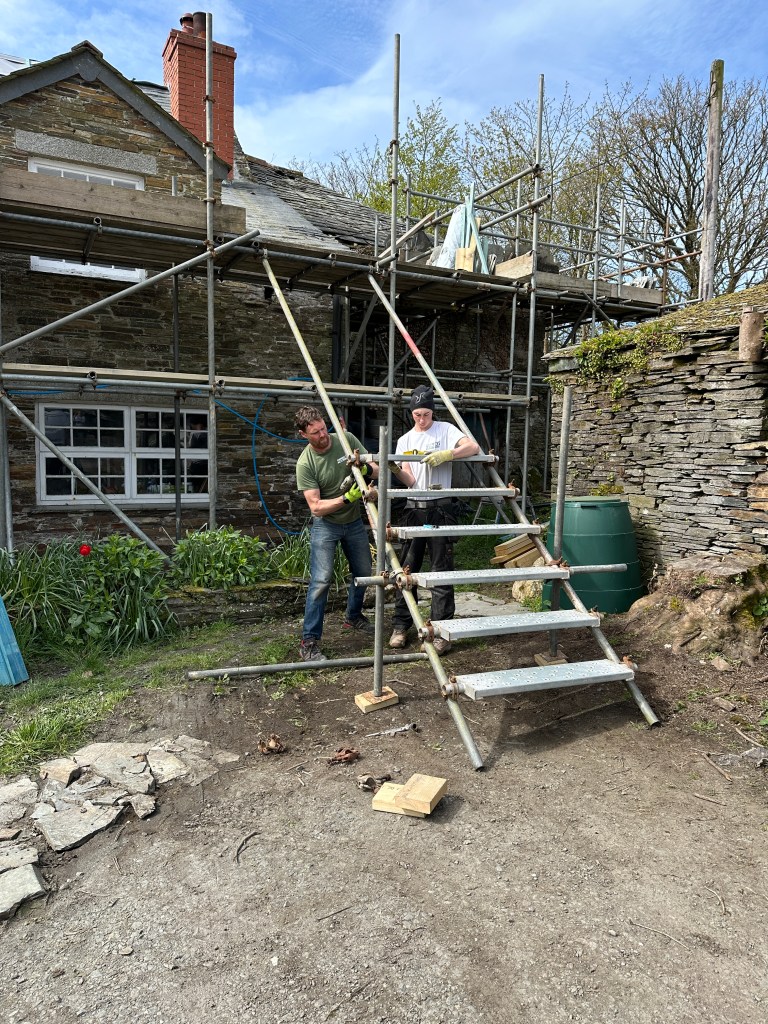
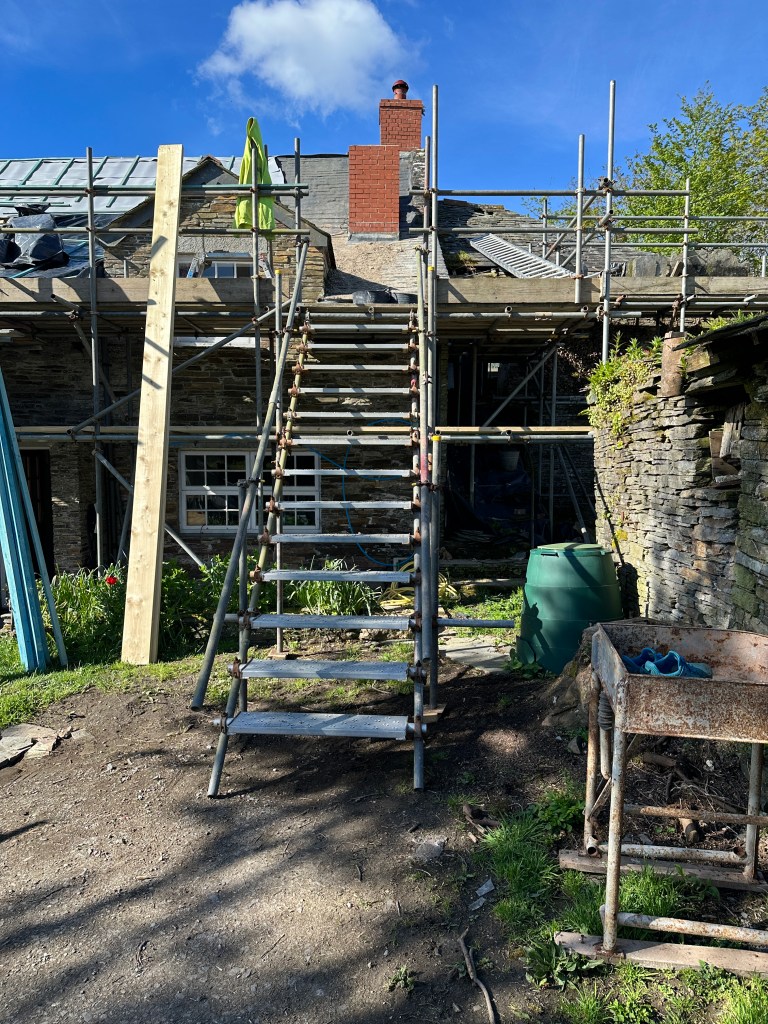
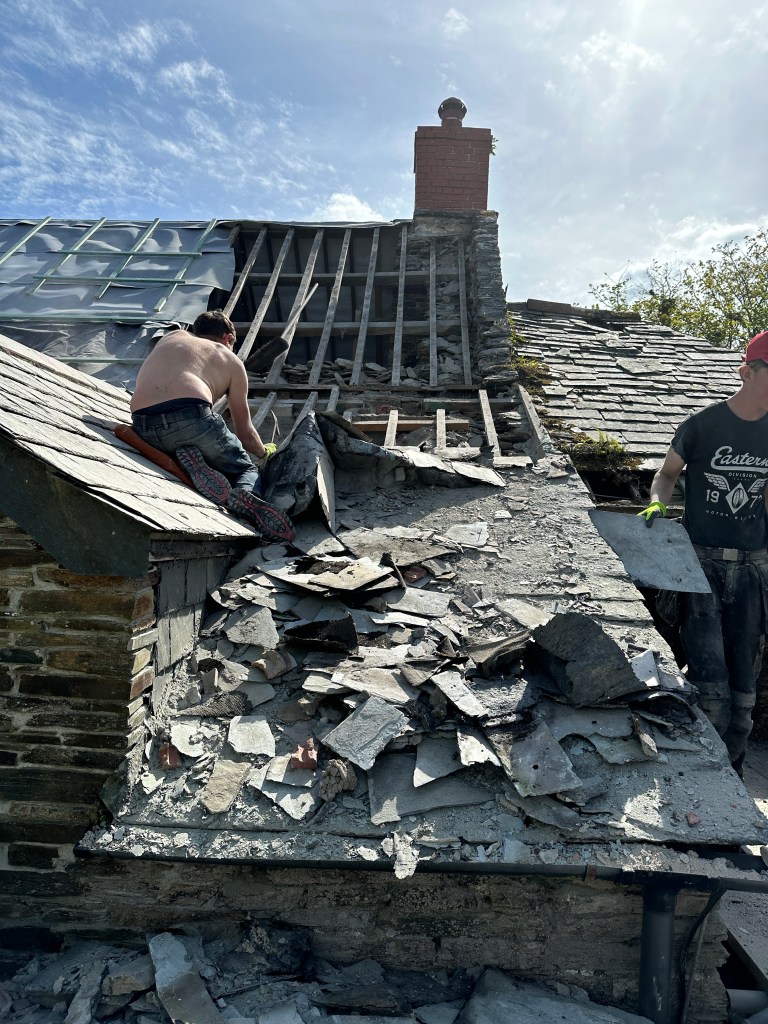
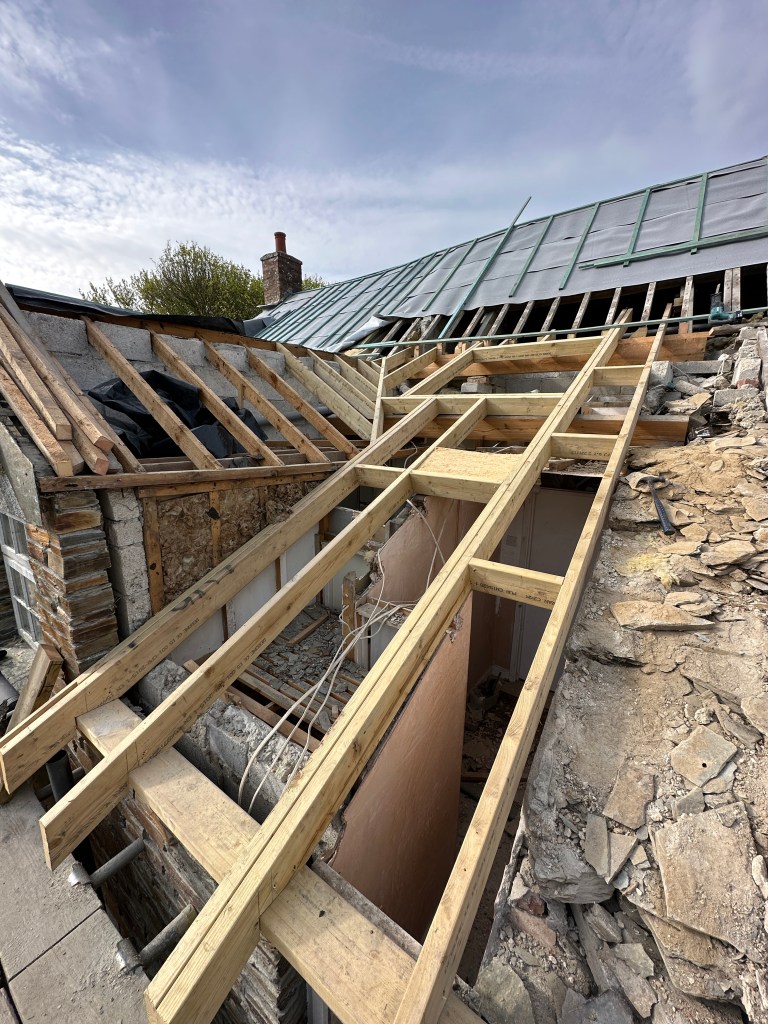
Before the re-slating on this side can even begin there are a number of other complications to address. Firstly, much of the original timber has rotted away or is in poor condition. This has meant sourcing, preparing and placing new beams and batons. Here, Fiddian’s carpentry skills have been useful, as he has been able to do a lot of this work himself. Then there is the jigsaw puzzle of working out how to fit this framework together in a way that not only supports the slate roof, but also works with the planned revisions to the rooms below. I have spent a lot of time watching from ground level as Fiddian and the roofing team wield measuring tapes and scratch their heads. Fortunately, with input from our architect and engineer (and an encouraging visit from Building Control) we seem to be getting there. It has surprised me how much ad hoc design work and problem solving needs to take place with an old building like this – something to be prepared for if you are taking on a renovation project.
Other considerations have included the need to position several skylights. These are conservation grade and very heavy, so not only do they need to be positioned correctly, but the framework around them needs to be able to support a lot of weight. In addition, we have the bat mitigation to consider. As part of the process of seeking planning permission, we had to commission a bat survey. Several species of bats were observed around our roof, including a greater horseshoe, lesser horseshoe and pipistrelles. As the building work is likely to disturb the bats and potentially scare them off the property entirely, we are required to do things in stages and carry out mitigation work to protect the bats during construction and provide alternative housing for them. One option was to build an entire “bat hotel” for them on another part of the property, but this would be quite a big structure and there was no obvious place to put it. As our roof space is so large, we decided to give it over to the bats. There will be one area exclusively for the greater horseshoe and another for the lesser! This of course means that we can’t build into the attic spaces or have vaulted ceilings in some of the upstairs rooms, but it seems a small price to pay for bat protection. I hope they will like their new home.
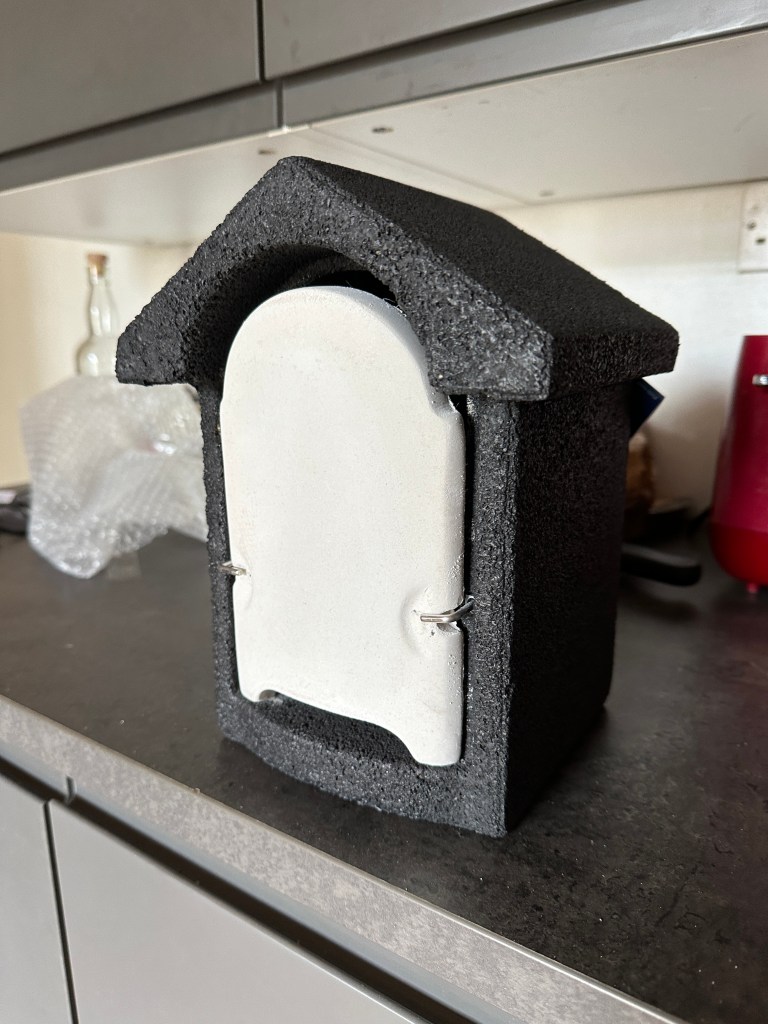
This week, Dr Janine Bright, our consultant bat expert, actually came to observe the roofers take slates off a dormer window which a pipistrelle had been observed emerging from. They can roost in surprisingly small spaces, so we took the slates off pretty carefully. No bat emerged, sadly. If it had we had a special bat box for relocating it in. This box has now been placed up one of the trees in the woodland area – I hope a bat can make good use of it!
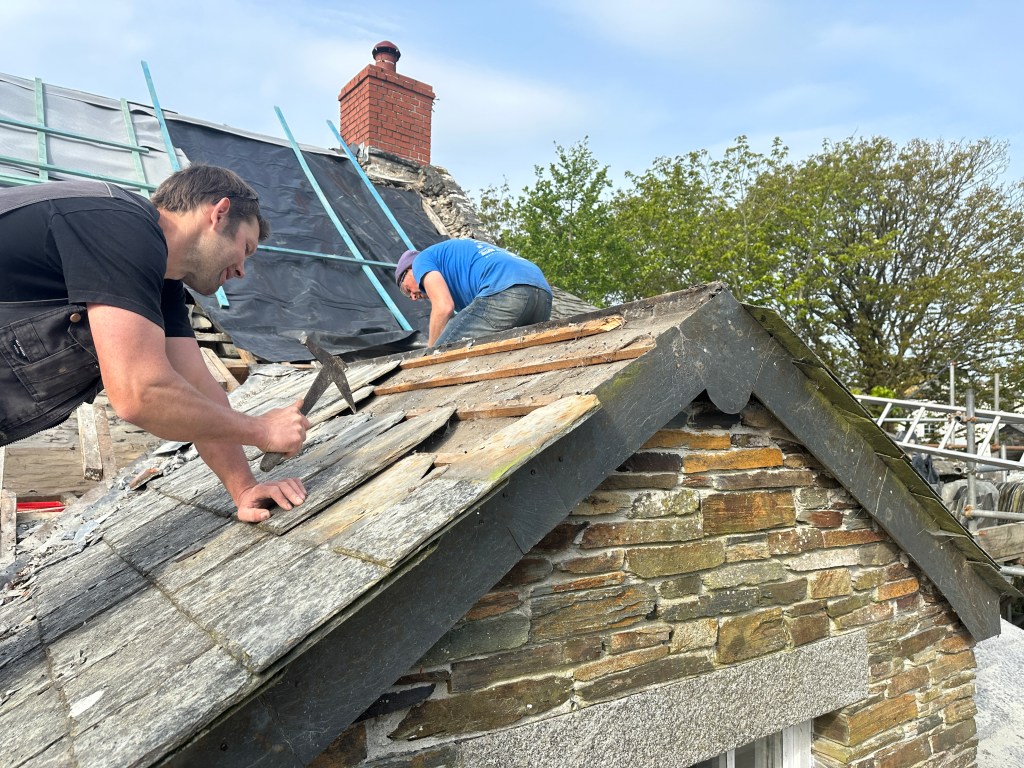
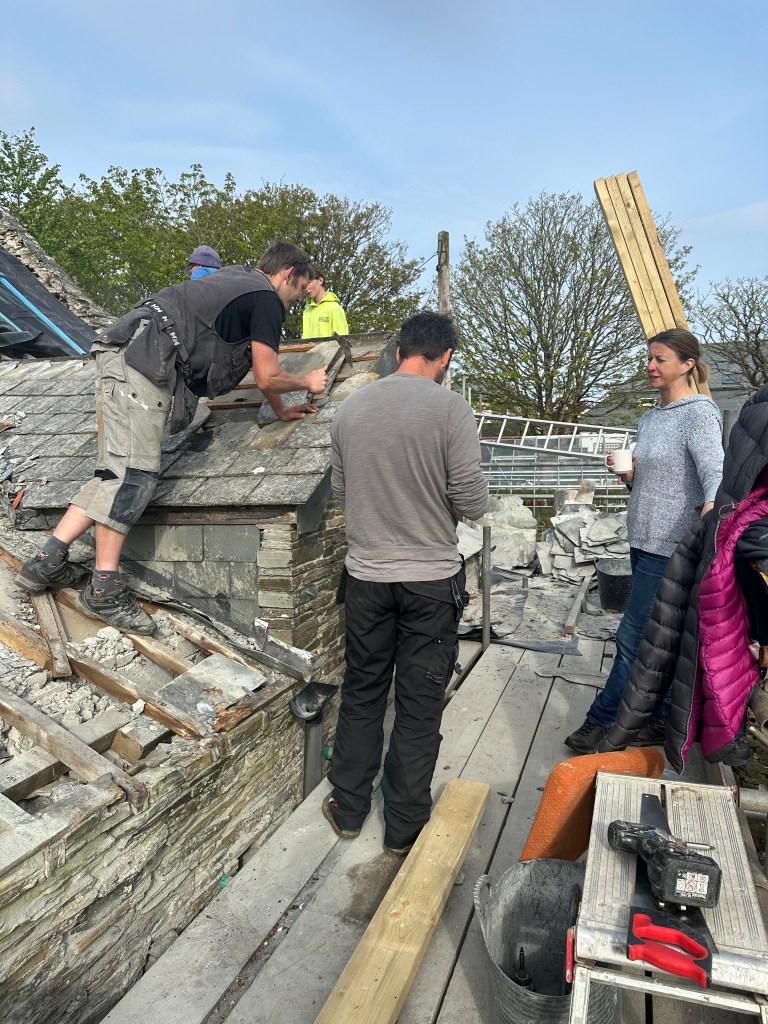
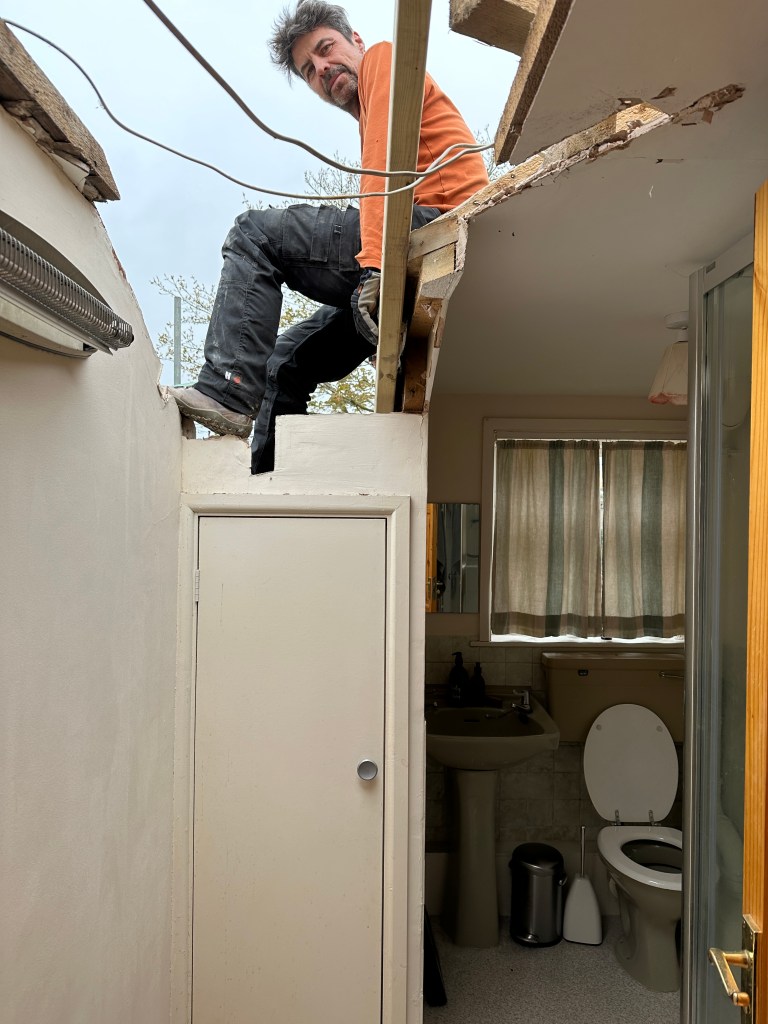
So, in summary – the roof was and is a massive project, and we are only part way through it. This means we are currently living in a house with more than half the roof completely off. When the roofers finish for the day they nail down plastic sheeting to keep the rain out. If the wind blows the sheeting flaps about and sounds quite scary. During the working day, our bathroom is completely open to the elements, with roofers wandering around on the beams above. This means we have to time our toilet trips and showers rather carefully! Nevertheless, there is somehow something lovely about being (temporarily) without a roof. It is giving us a sense of what the finished house will be like, with much more light streaming down into the dark interior. In a place as grey and grim as Cornwall can often be, I think this is going to really brighten up our living situation.
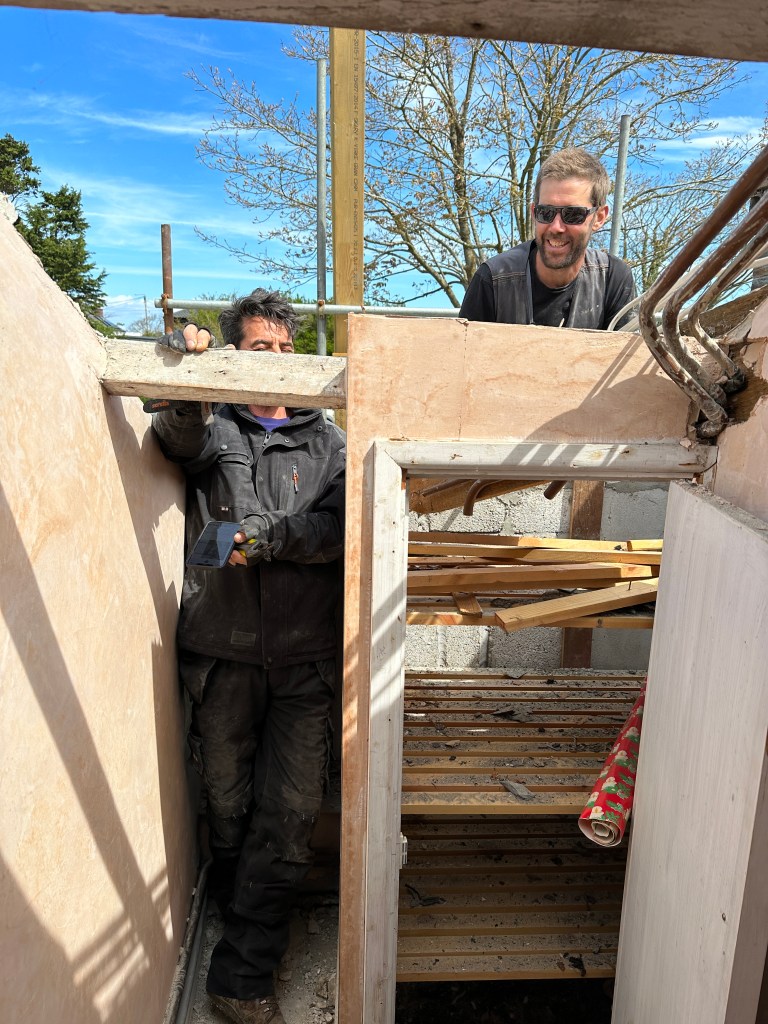

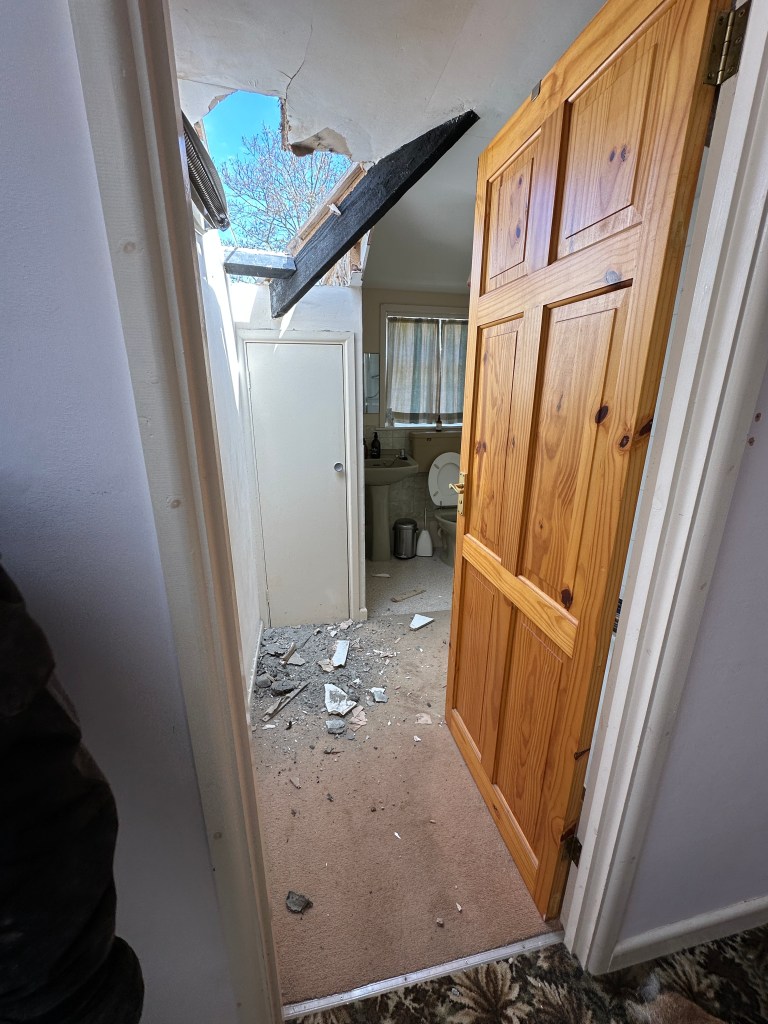
Next steps are to finish the structural work on the roof and then complete the slate sorting and the sourcing of additional slate. The re-slating work can then start properly (weather permitting) and we should (fingers tightly crossed) have a weather-proof roof with insulation beneath and several snug bat caves waiting for new inhabitants. (Not to mention that we will be able to pee in peace once more!)
 bookbusbird
What a lot of patience is required! It is pleasing to note the progress thus far 🙂
LikeLike
Great update.
LikeLiked by 1 person