I haven’t written much about what we are doing with the interior of the house firstly because it isn’t much and secondly, we are in the process of seeking planning permission and I don’t want to jinx it. However, since obtaining planning permission is very much part of the journey of restoring a Grade II listed house, and as I’m trying to document the process as honestly as I can, it’s probably time I shared something about this major part of what we are trying to do.
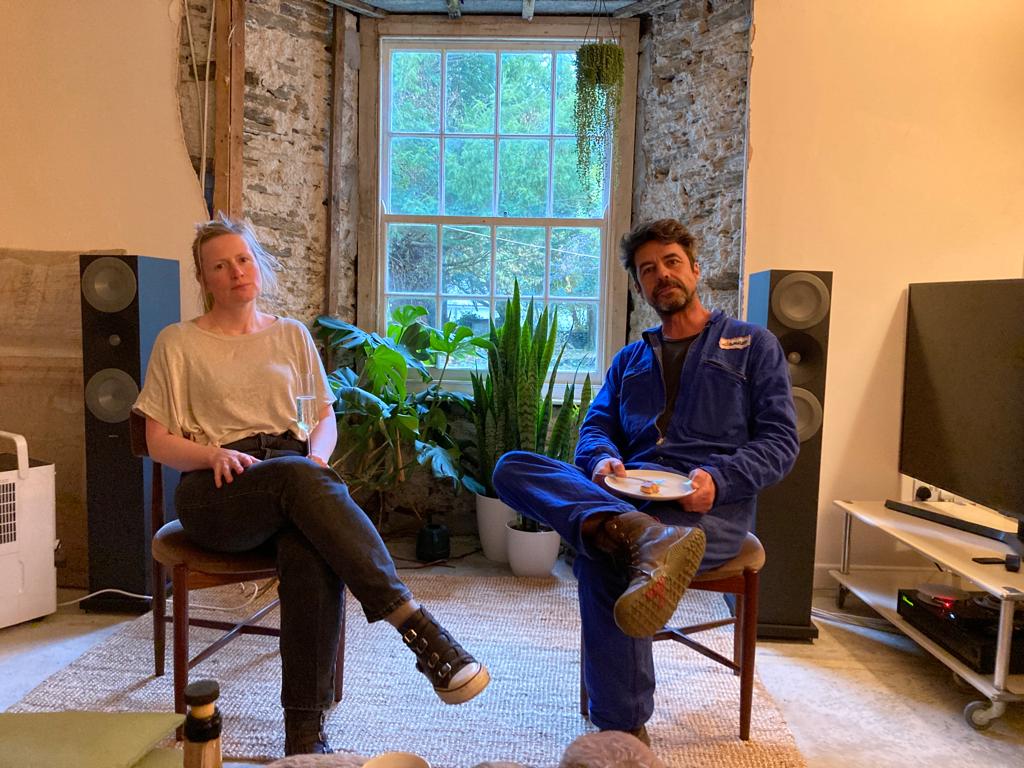
As you can see from the photo above, the interior is… in progress. The exterior walls are exposed around the window of our living room simply because the plasterboard there was so damp and rotten we had to take it off to let the walls dry out. Although the house has been around since approximately 1650, according to the listing, almost nothing of the original interior remains. Local legend has it that the house was an actual court house at one point. This seems likely, given that the house immediately opposite was once the jail, and people who have visited remember there being manacles attached to the walls as recently as the 1940s. In the 1650s the house would presumably have been very grand (hence the extent and size of the walled gardens to the front and the various stone structures and out-houses in the grounds). In 2022 however, only hints of this past remain. The previous three inhabitants were obviously somewhat strapped for cash, and the place has fallen into disrepair. Coupled with that, Roger and Enid, who worked in the pottery and inherited the house from the pottery owner when she died, were not a couple and wanted to lead separate lives, so they split the house into two in around 1980 and in so doing wiped out almost all of any remaining original features.
This latter event might have been a shame, but for us it makes life much easier as there is nothing really to preserve inside the house. In addition, a lot of the conversion introduced things like gypsum plaster, which isn’t a good material to cover damp Cornish walls with. Our planning application is, for the most part, a request to return to the house to its original form as a single dwelling and to replace poor quality materials with suitable, breathable ones. This will involve ripping out a lot of the cheaply done interior walls and floor and removing the wooden staircases on either side of the artificial divide. We will add a central staircase where we estimate the original would have been and create a large hall at the front of the house which is a bit more fitting for such a grand building. We’ll also do a lot of work to make the place less damp and cheaper to heat – I’ll write more about both of those things in future. For my part, one of the main reasons I really wanted us to take on this massive project is because the inside of the house just feels so wrong in its current state. The two sides of the house are divided from each other by a huge, artificial middle wall, which you can see part of in the staircase photo below. This wall blocks out a lot of natural light and makes the house feel like it is at war with itself. To me the two sides of the house are crying out to be reunited, and to have light and warmth pouring in to them again.
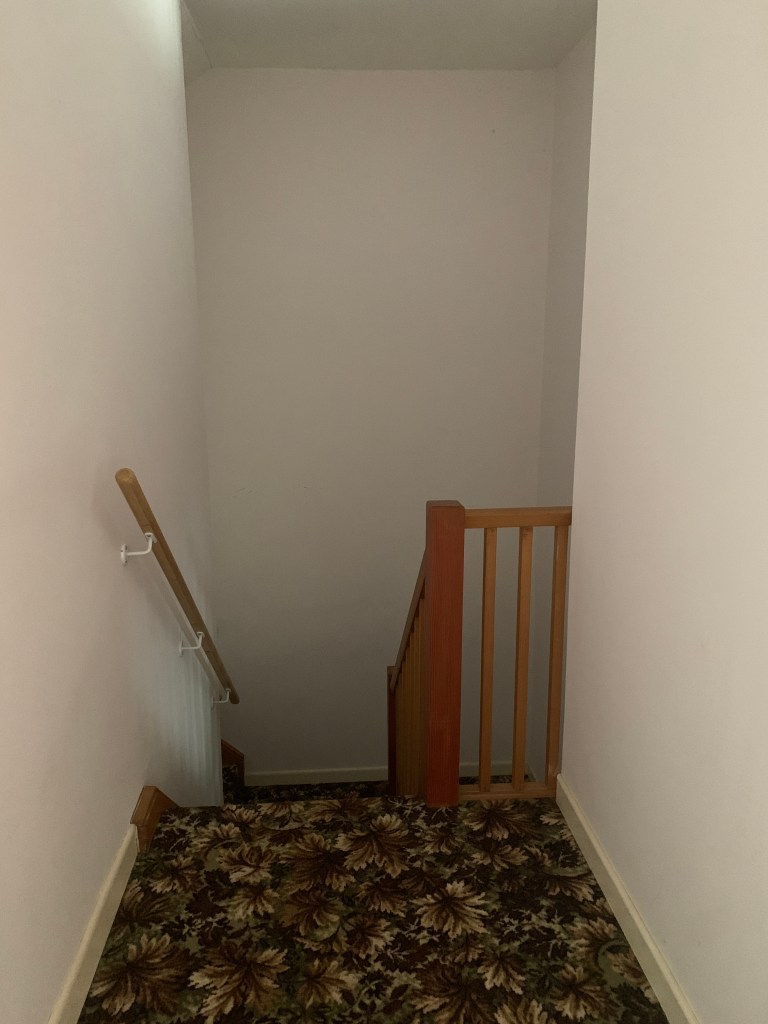
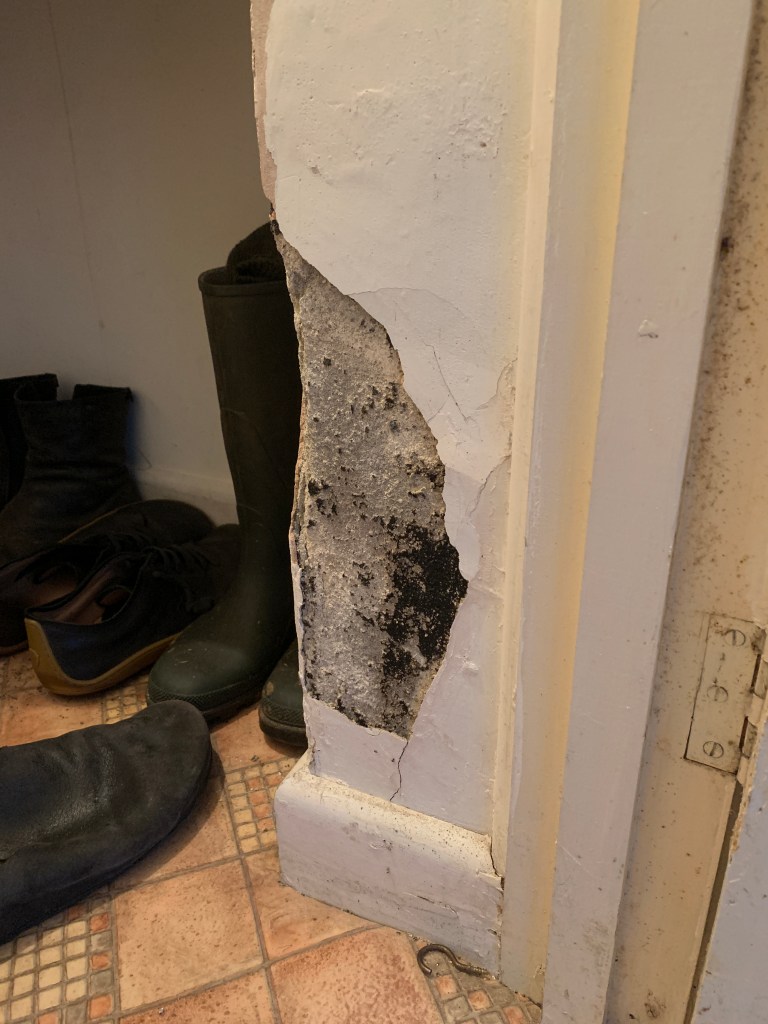
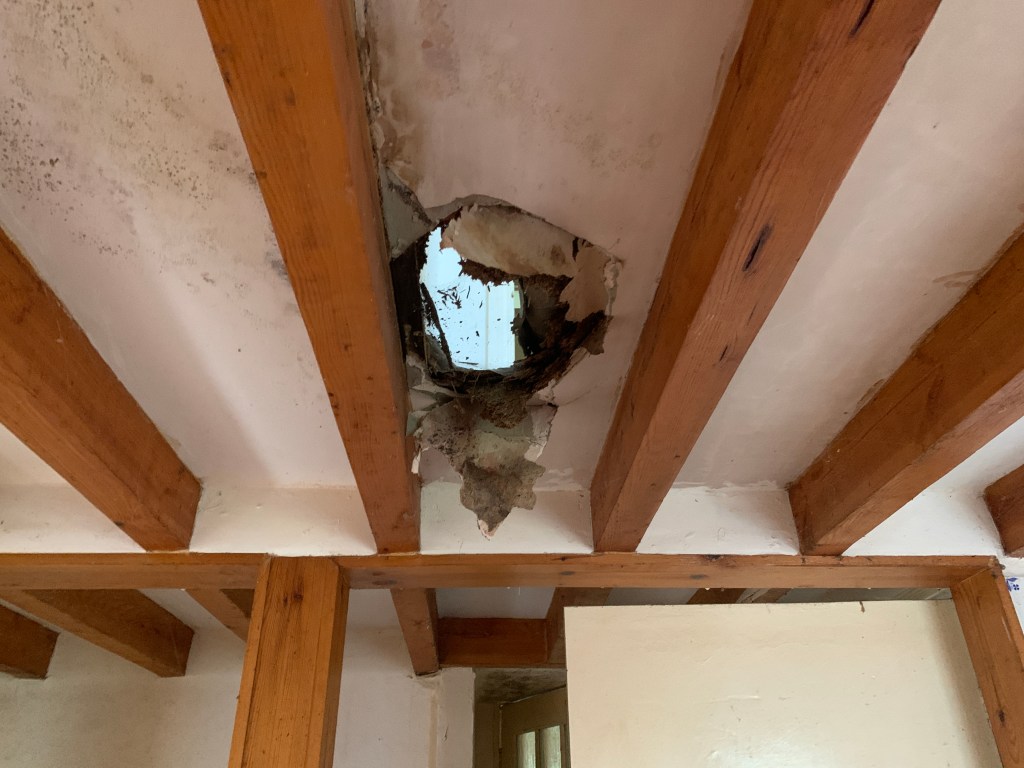
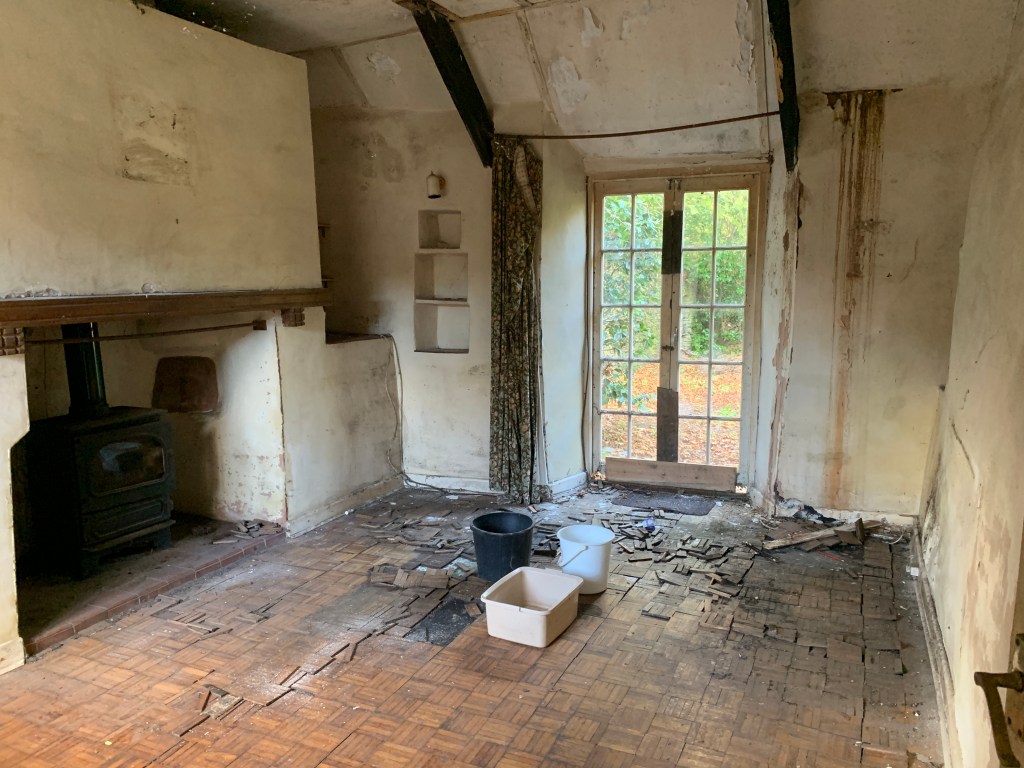
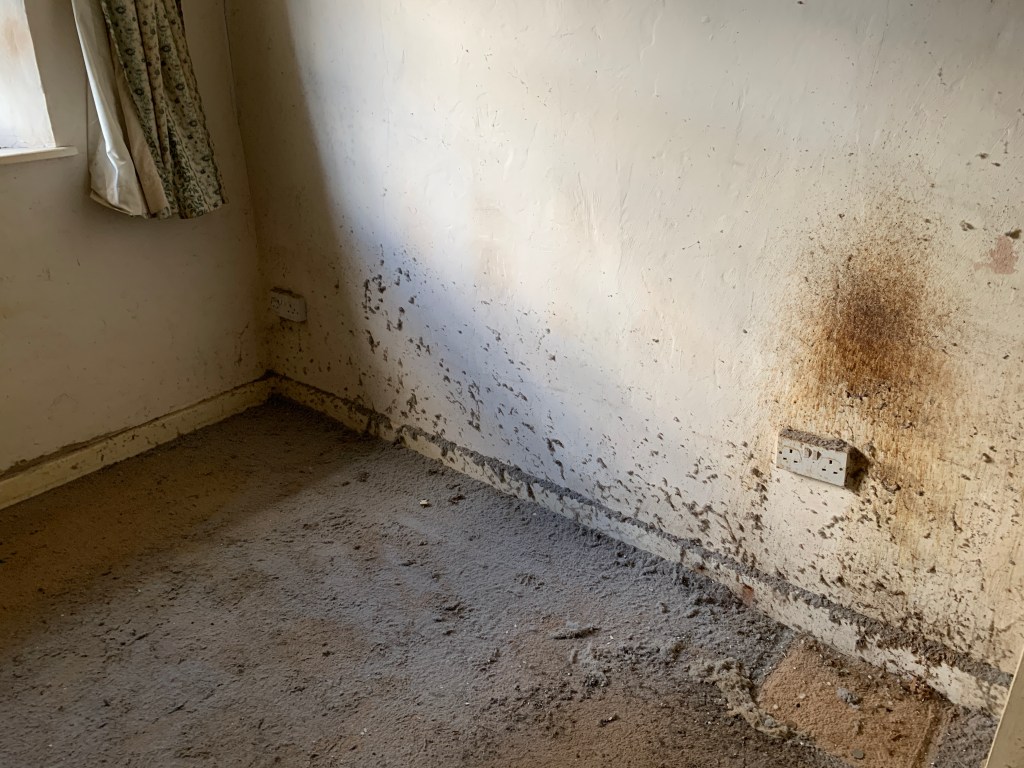
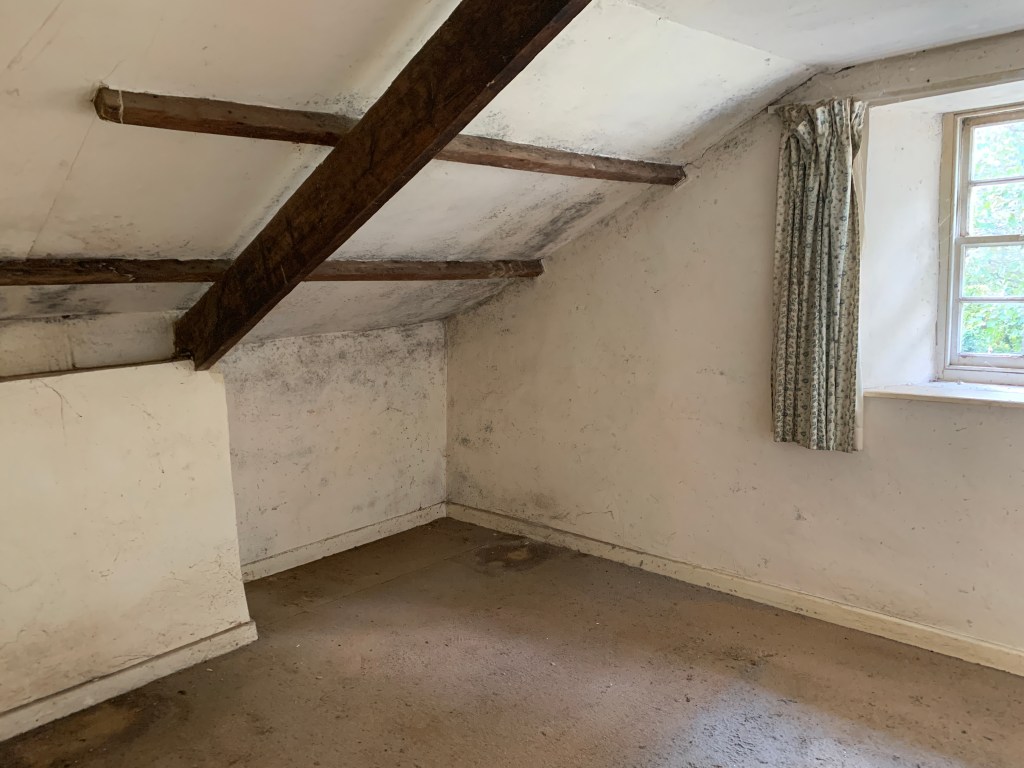
The only slightly controversial thing we want to do is to add a modern extension to the kitchen at the side of the house. I wasn’t sure we should even be applying to do that, but apparently planning officers these days are a lot more open to modern adaptations of older houses, provided that the character of the original building is maintained and the adaptation makes the house more suited to modern living (hence prolonging its useful life).
Putting together the application took us approximately three months: from June to September. We worked closely with our architect, who is experienced both in converting listed buildings and in building eco-houses. Probably the trickiest part on our side was working on the heritage impact statement. This is an important part of any planning application involving a listed building, and involves detailed explanations of the proposed works and an assessment of the impacts they will have on the character of the building. A lot of research went into this part, including discussions with experts in local buildings, local tradespeople and materials suppliers, plus some experimentation with materials like Cornish lime plaster to see what would work in terms of damp-proofing. We also commissioned an environmental impact specialist to assess our site, and to advise us what to do to take care of the existing bat population (more on that in future). There was also a lot of back and forth with our architect over drawings, plus wandering around inside the house and the proposed extension squinting our eyes and trying to imagine the future structure and space. I am pleased to report there were only two arguments: one about windows (which I won) and one about where we should hang coats (which I think I won).
We submitted the planning application in early September and are now waiting to hear what the response from the planning office is. Quite by accident, F saw a notice on the local noticeboard about an upcoming parish council meeting in which our application would be heard. This, it turns out, is an important initial part of the planning application process. Local people can register questions, comments and objections to a planning proposal online, but many will use the parish council meeting to do this. Rather nervously we went along to the meeting and, at the prompting of our architect, introduced ourselves and explained a little about what we were trying to do. This was really helpful, not least because we met quite a few local people who I’m sure we’ll get to know better over the coming years. It was also encouraging to see how supportive everyone was of our proposal. I think this is partly because folk in Cornwall are understandably tired of incomers buying up property for second homes rather than as their primary residence, but also because our house is a much-loved place locally and it has been a source of sadness for many as it gradually fell into disrepair. We left the meeting feeling much heartened.
In any case, the proposal still needs to be formally approved by the Council planning committee, so we still have a ways to go before we can even think about starting work. In the meantime, we have separate permission to replace the roof, which is really starting to cave in in places. Then we will see what we can do to stay warm this winter (coats and hot water bottles will feature heavily in this plan, I suspect).
 bookbusbird
May good fortune follow you – especially during the winter! You are both brave to tackle this and I hope you will receive a LOT of support along the way.
LikeLike