I have been busy with self-employed work so haven’t had as much time as I’d like to document the work on Bossiney Court. Nevertheless, a huge amount has been going on both in and around the house.
One thing to explain about what we are doing is that it is both a restoration of a Grade II listed building and a new-build extension on the side, which will create a large new open dining area on what was once an exterior courtyard. Although the exterior of the extension will be slate walls and a rag slate roof, just like the main house, the interior will be much more modern and light-filled than the rest of the house, and will be insulated to almost passive-house standard. This means we are juggling two quite different building styles and approaches as we manage this project.
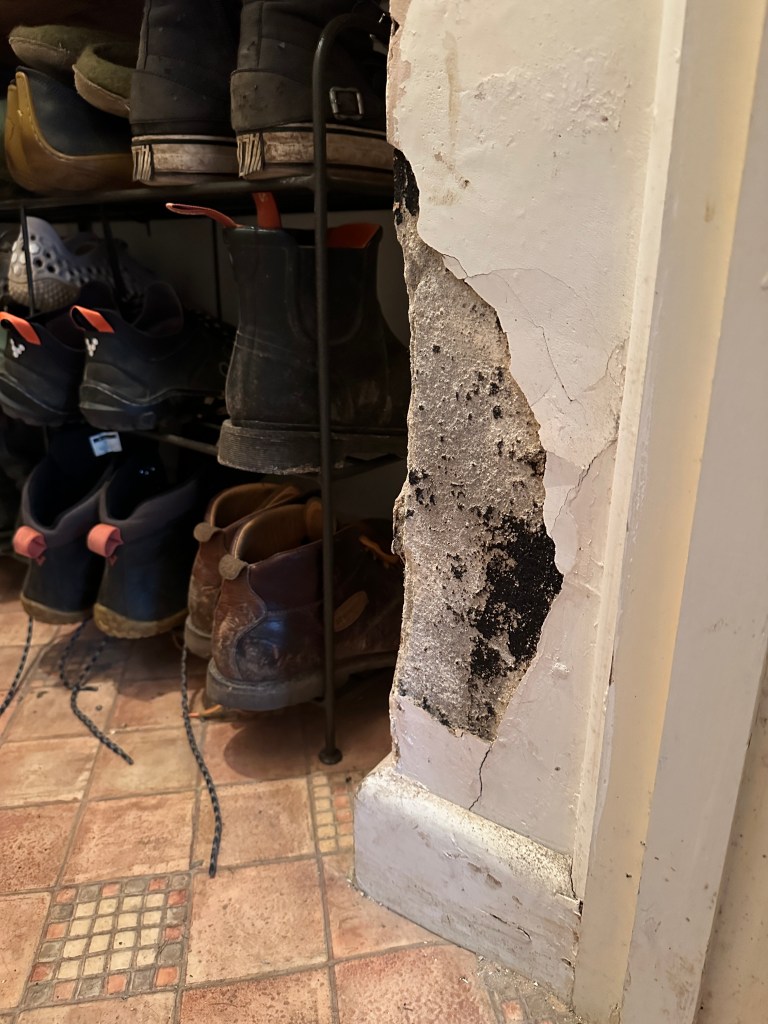
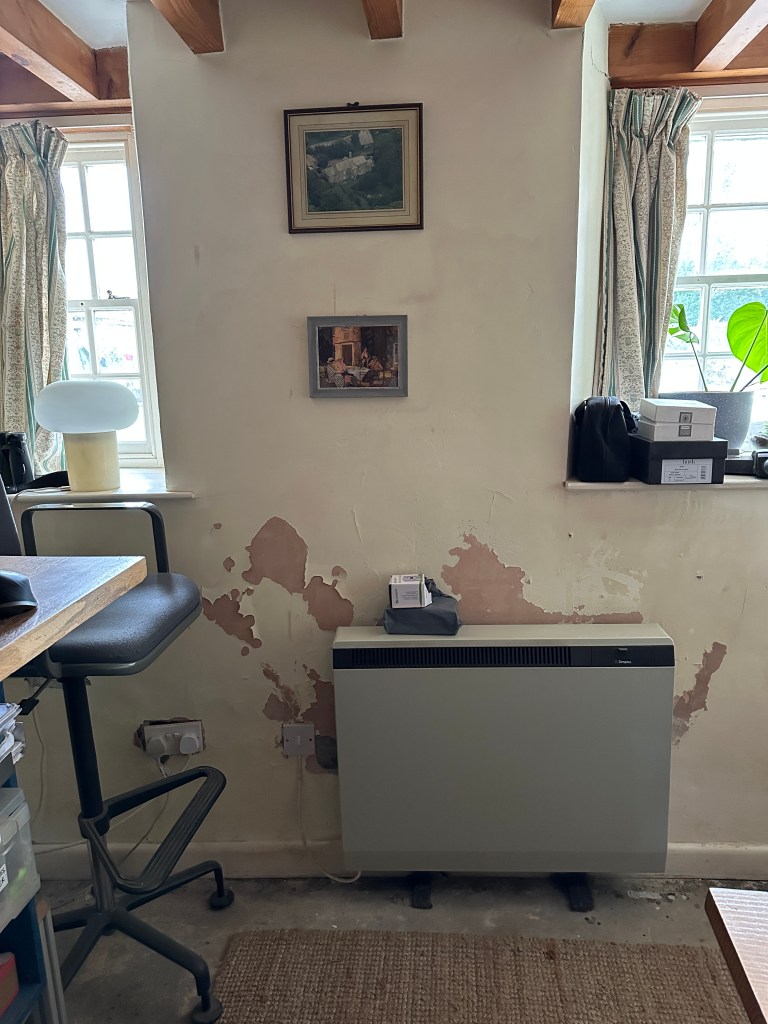
The drainage system is now mostly complete meaning that rainwater is now being channeled away from the house and into soakaways instead of into the walls. On its own this hasn’t cured our internal damp and mould issues, but it has made a noticeable difference (the wall in the dining room is no longer damp to touch, for instance).
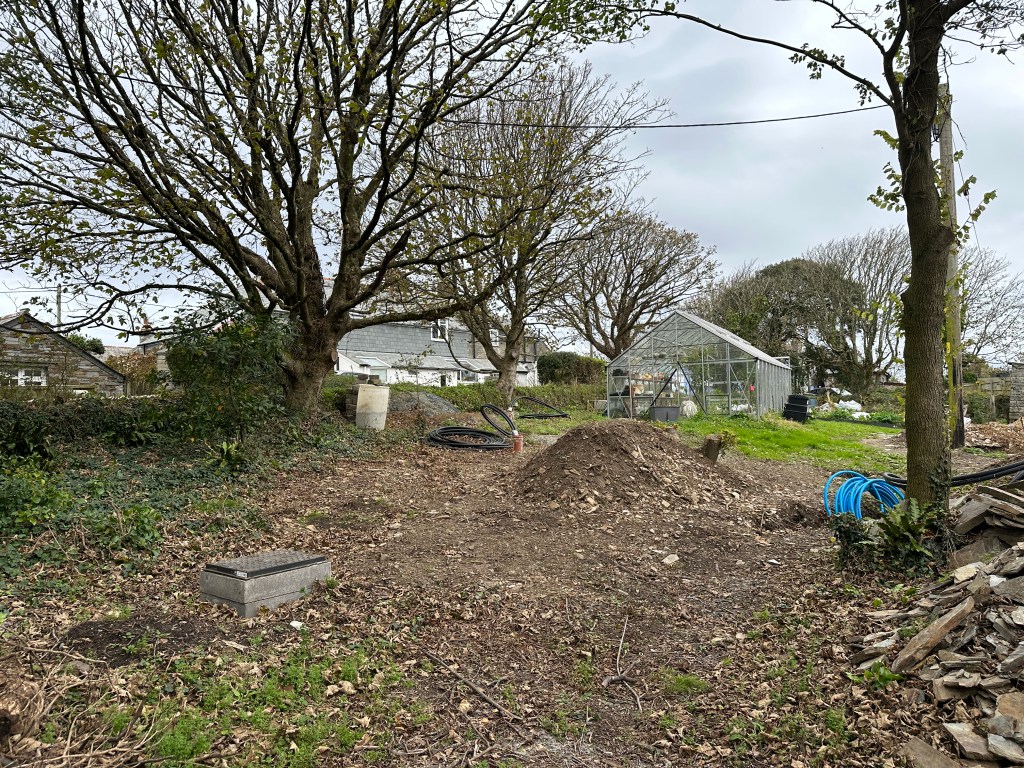
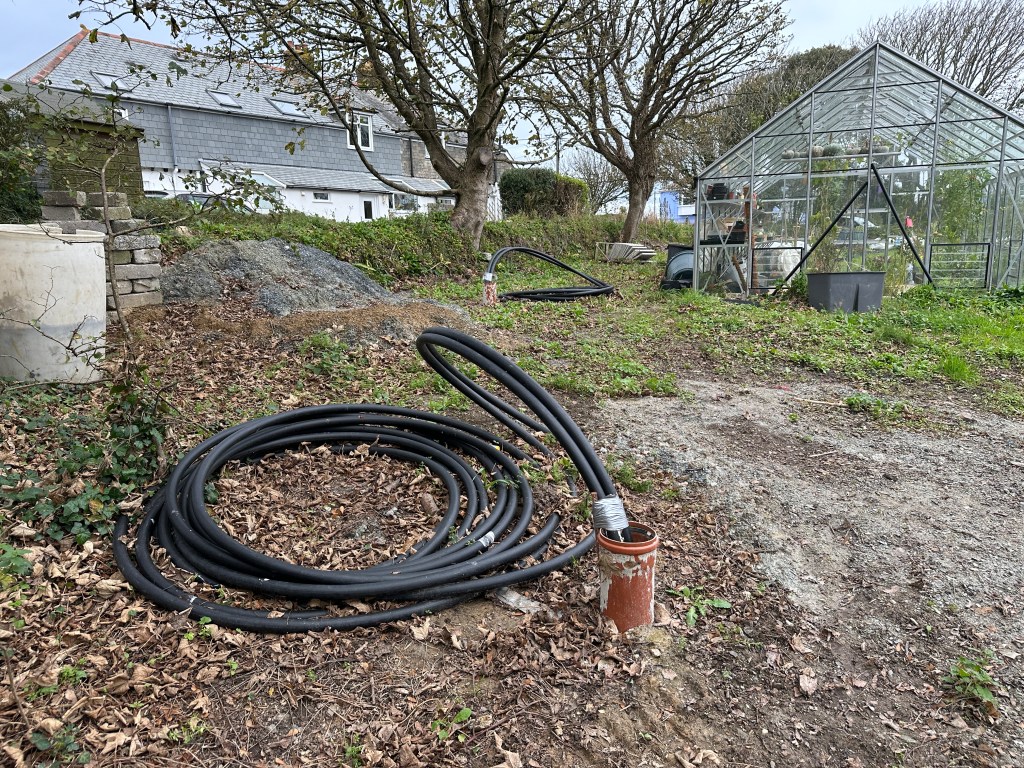
The 3 boreholes for the heatpump and the water borehole are now dug and tidied up above ground. The water from the water borehole now needs to be tested and treated before we can use it, and the pipes from the heating boreholes need to be connected to the manifold and (much later) connected to the heatpump system within the house (which we probably won’t install until next year).

We’ve commissioned a local joiner to make all the replacement windows and doors, as well as the new ones for the extension. This has required a great deal of research, planning, measuring and negotiation. We discovered during the summer that because we are converting what was previously two houses back into one house, this qualifies as a “change of use” according to building control (even though the house was a single dwelling for most of its existence), and therefore we require a different approach to things like fire safety and window security, e.g. we need to use fewer panes of glass and have the wooden parts stuck on rather than framing multiple panes. Because the house is listed, we also had to juggle the requirements of the conservation officers that the windows be in keeping with the “original” Georgian design (God knows what the windows actually looked like when the house was built in 1650) and our own requirements that the windows be double glazed in order for us to keep the house warm and dry. For a while it seemed like we were stuck between the requirements of conservation and security, but in the end we were able to come to an agreement that satisfied all parties. The first batch of windows are now in construction and we may even have some installed before Christmas. The current ones are nearing the end of their life and I am constantly having to block up holes and clean mould off them.

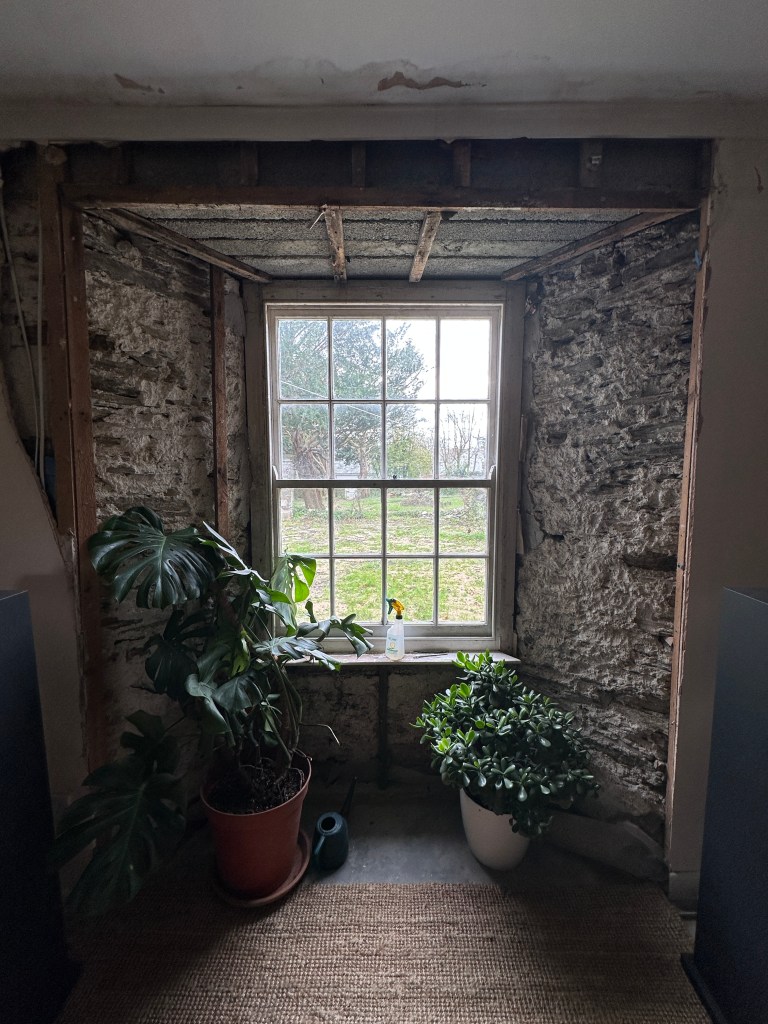
In a change to our original schedule we decided to bring forward work on the exterior of the main house before beginning on the extension walls and roof. This was partly because we are approaching our second winter in an unheated house, and we wanted to get the insulation on the back of the house and re-point the front with lime to allow moisture to escape the walls instead of damaging the fabric of the house. If you’re wondering why we are treating the front and the back differently, it again comes down to balancing the needs of the conservation officers (who rightly want to maintain the integrity of the front elevation of the house, which is beautifully built in slate but badly rendered in cement between the slates) and our need for a well-insulated and ecologically sound building. The back of the house is not so visible or historically important, and so we’ve been permitted to treat it differently to the front (insulating the exterior with breathable wood-fibre and then slate hanging on top). Instead of insulating the front elevation on the exterior, we will be insulating the inside with a thick layer of breathable lime plaster and removing the cement render and re-pointing with lime on the outside.
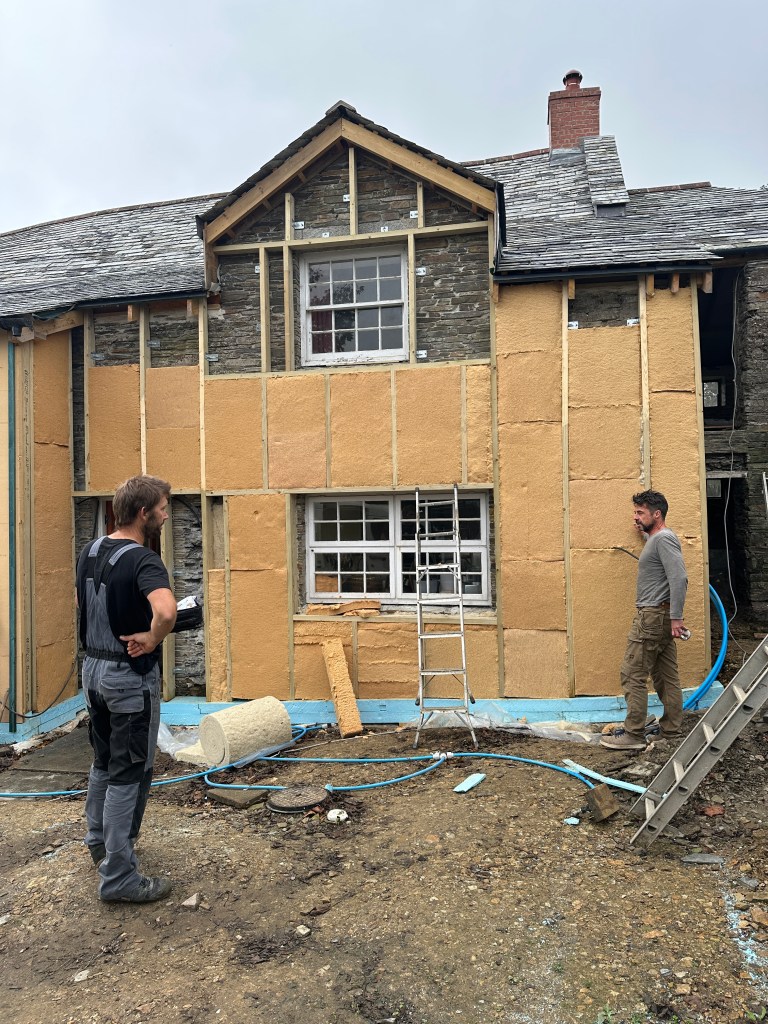

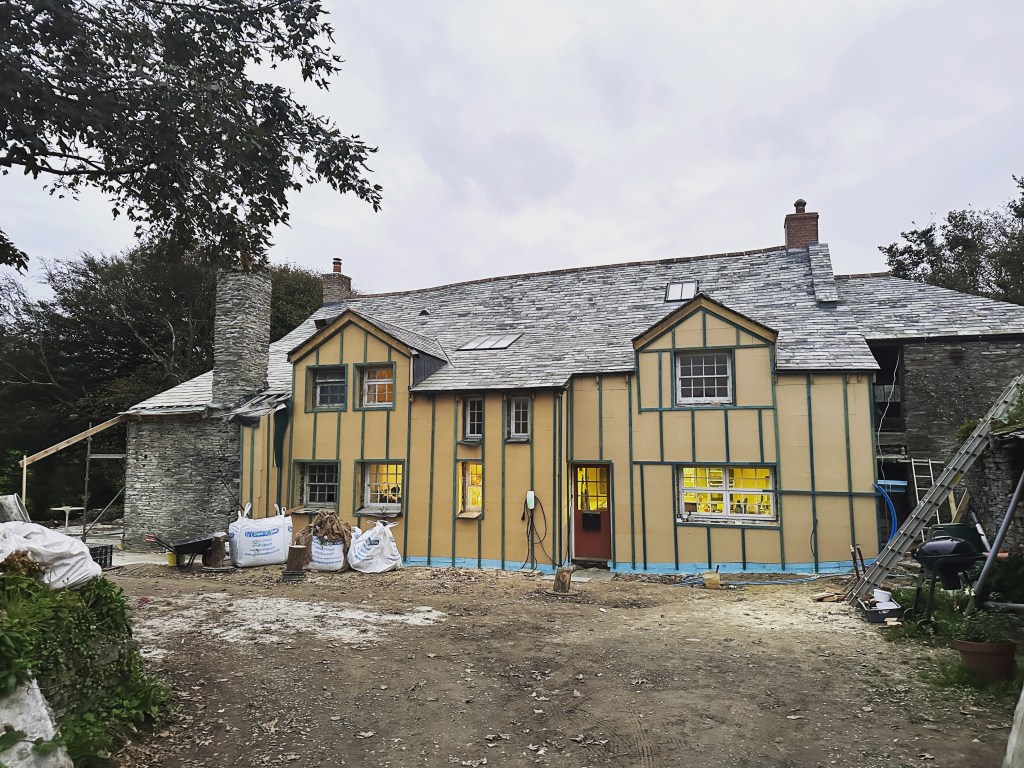
Our hope is that the combination of well-made, double-glazed windows and doors, plus thick layers of breathable insulation (wood-fibre and lime plaster) will create a house that looks as ancient and epic as it it always has while being warm and dry inside, enabling us to heat and ventilate the house with a ground-source heatpump and mechanical ventilation heat recovery (MVHR) system which will move and recycle warm and cool air as needed. It is comforting to see that the house is less damp this year than last, and that it heats up more quickly and stays warmer for longer once the fire is lit (I assume due to the thick layer of insulation covering one side of the house).
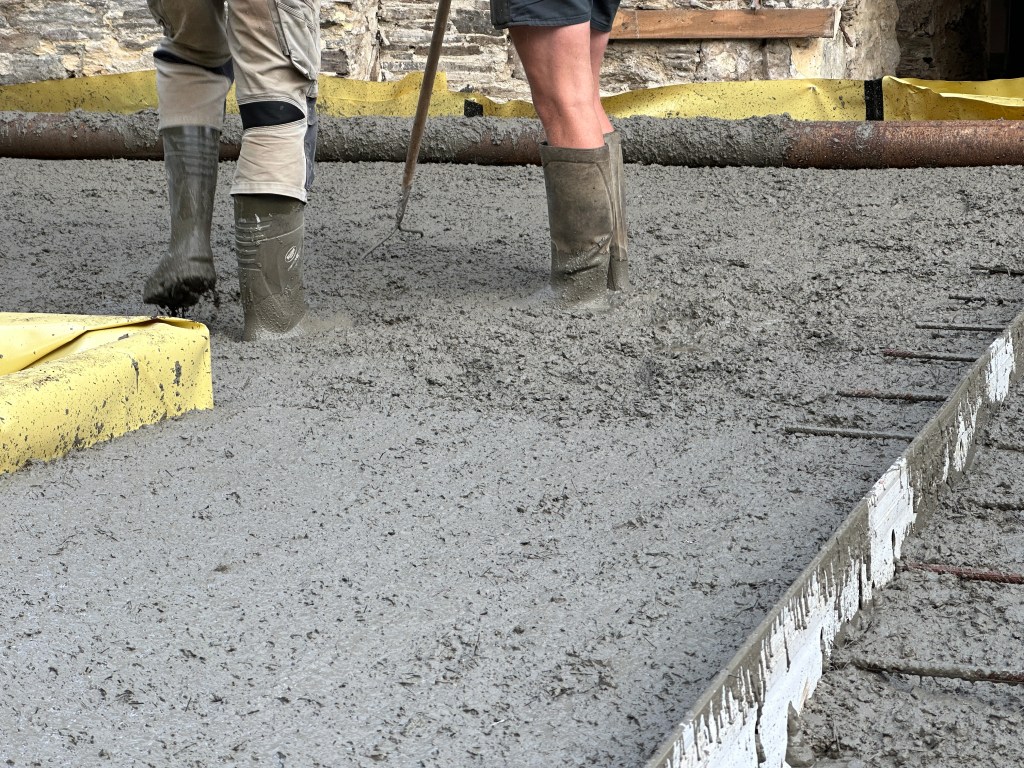
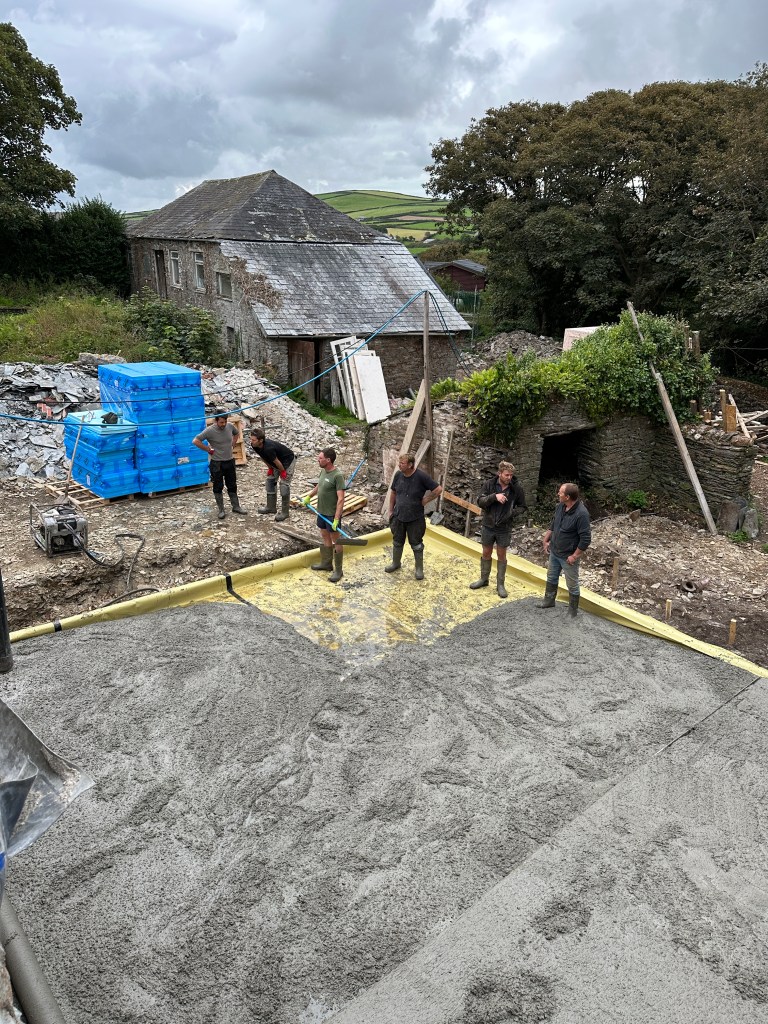
Back in August, the concrete slab for the extension was laid. That was a fun but stressful couple of days. At one point there were seven men and women on site pouring, levelling and controlling the concrete mix. It was quite nerve-wracking to watch, as mistakes during this part can be extremely costly and difficult to remedy, but fortunately everything went to plan, and we waved the building team off for a couple of weeks and took a bit of a breather.



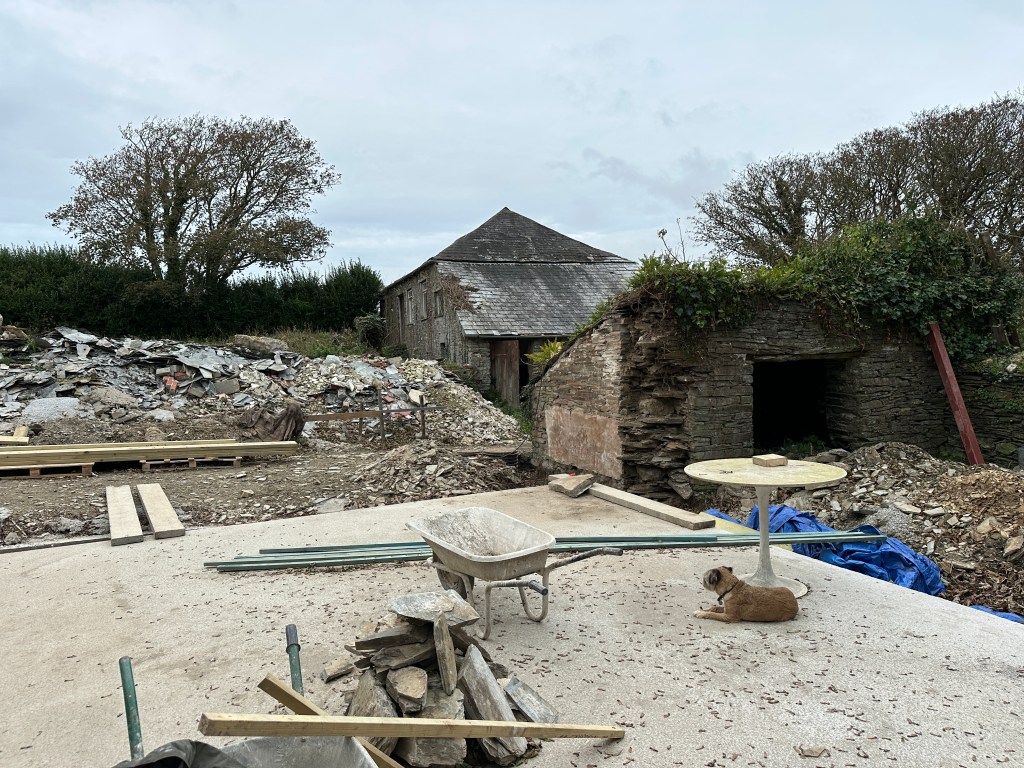
In recent days, work on framing the exterior of the extension has begun, and it is possible to begin to envisage what it will be like to live in the space. The main downside of the existing house is that it is dark a lot of the time, due to the elevation and the small size of the windows. However the extension will have skylights and a large set of glass doors which should enable light to pour into the space. I am looking forward to spending large parts of the winter in there and to finally being able to grow some happy indoor plants. In the meantime, I will content myself with the occasional cup of tea out on the slab and imagining the future when all parts of the house are warm, dry and happily (re)united!
 bookbusbird
It is really good to see the progress made thus far, especially as your winter is fast approaching.
LikeLike